


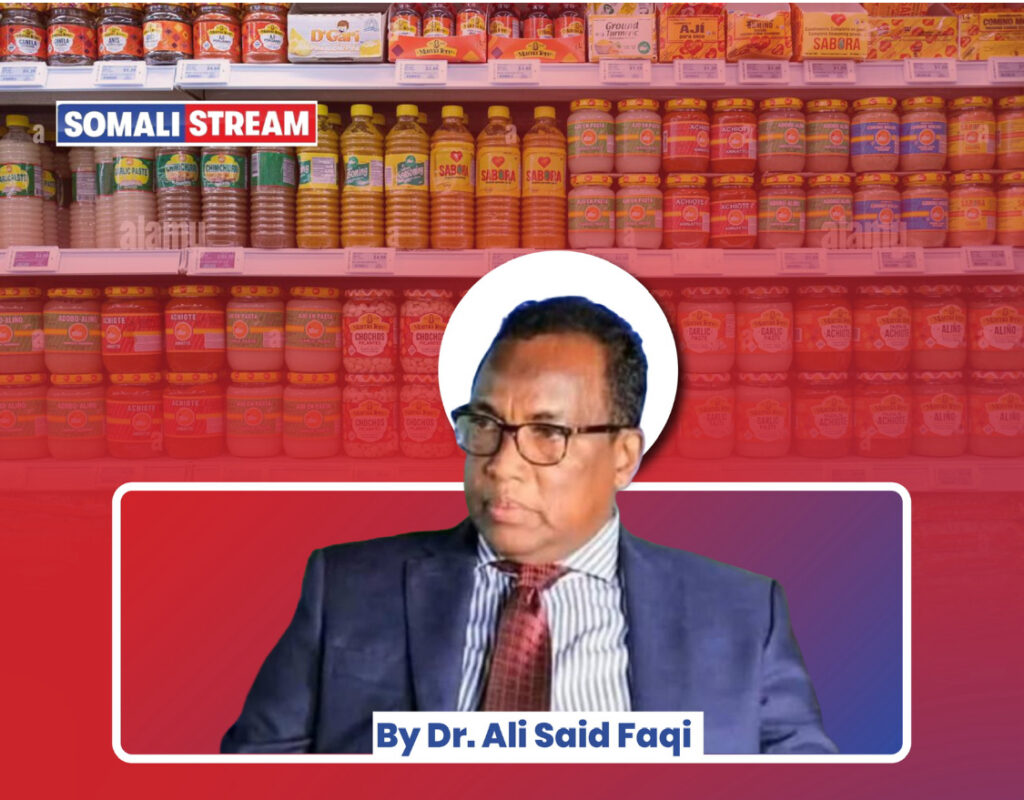
In Somalia today, a quiet but dangerous shift is unfolding across food markets.
Food, meant to nourish, sustain, and protect life, is in some cases doing the opposite. Across markets, staple products such as rice, flour, and pasta are being sold well beyond their safe shelf life. Some arrive already expired. Others are repackaged, relabeled, and returned to circulation as if nothing has changed. Once unsafe food enters the market, it spreads across society, reaching households of all income levels.
But what looks like food is not always safe to eat.
Expired food is not simply old. It is altered. Nutrients break down. Bacteria multiply. In grains and cereals, toxins such as aflatoxins can develop, substances known to damage the liver and increase the risk of cancer over time. The consequences are visible in rising cases of foodborne illness, weakened immunity, and a growing burden of preventable disease.
In addition to infection and toxicity, poorly stored and expired food may also contribute to allergic and allergy-like reactions. Mold contamination, food degradation, and chemical changes can trigger symptoms such as skin irritation, respiratory discomfort, and digestive distress. These effects are increasingly observed, even if they are not always clearly understood.
And yet, this is only part of the story.
There are widely reported and deeply troubling cases of animals that die before proper slaughter being processed and sold in markets. Beyond the clear public health danger, this practice violates food safety standards and directly contravenes Islamic dietary principles. In a society guided by faith, this should be unthinkable.
There are also reported cases of animals treated with antibiotics that die and are then slaughtered and sold, with drug residues remaining in the meat. These residues are not harmless. They can trigger allergic and hypersensitivity reactions and contribute to the emergence of antibiotic resistance, a serious and growing public health threat.
Yet it continues.
It is often said that politics is the source of many of Somalia’s challenges.
There is truth in that. But politics is not the only force causing harm. Equally damaging are uncontrolled and unregulated business practices taking place in broad daylight, often with little fear of consequence.
Speak to anyone in the country and the story is the same: expired food is imported, repackaged, and sold. This is not hidden. It is widely known.
Awareness and technical understanding of the problem remain limited in Somalia, and it is not treated with the seriousness it requires. Weak institutions further compound the issue by limiting effective oversight.
There is also a commercial dimension that cannot be ignored. Some traders knowingly deal in expired food, either importing products that are already past their shelf life or repackaging them to conceal expiration dates before selling them.
These are not accidental lapses. They are deliberate business practices, driven by profit and sustained by weak oversight.
But these practices do not exist in isolation. They continue, largely unchecked.
Expired consignments do not pass through ports on their own. Labels are not falsified without scrutiny failing. Unsafe products do not remain on shelves without oversight being bypassed. These patterns point to failures of integrity within the system, where rules are ignored, enforcement is weakened, and, at times, corruption enables harmful practices to continue.
Everyone sees it. Very little stops it.
When corruption intersects with food safety, it becomes a direct threat to public health. Inspections are compromised, unsafe food enters the country, and enforcement becomes selective. The same practices repeat because the risk of consequence remains low.
At its core, this reflects a breakdown in accountability.
The consequences are not abstract. They are seen in clinics treating children with severe diarrhea and dehydration, and in households where illness follows a meal that should have provided nourishment. They are carried by a health system already under strain, forced to respond to risks that should never have reached the public.
There is also a quieter, more enduring cost. Repeated exposure to unsafe and nutritionally degraded food contributes to long-term harm: stunted growth in children, weakened immune systems, and increased vulnerability to chronic disease. These effects shape the health and future of an entire generation.
When people begin to question whether the food they buy is safe, trust begins to fade—trust in markets, in institutions, and in the systems meant to protect them.
The path forward is not complicated. But it demands resolve and urgent action.
The response must reflect the scale of the problem. These practices are widespread and persistent, and solutions cannot be partial or selective.
The recommendations must be applied consistently across all states and cities of Somalia. A fragmented approach will only shift the problem from one region to another. What is needed is a coordinated national effort that ensures the same standards, the same enforcement, and the same level of accountability everywhere.
Food imports must be properly inspected. Expired products must be rejected, not redistributed. Repackaging and relabeling must be treated for what they are: fraud with direct consequences for public health.
Meat safety must be enforced without compromise. Animals that die before proper slaughter must never enter the food supply. This is a matter of science, ethics, and faith.
Accountability must be restored. Where regulations exist, they must be enforced. Where enforcement is weakened by corruption, it must be confronted directly. Where officials enable or overlook harmful practices, there must be consequences.
This is not only a regulatory issue. It is a matter of integrity.
Safe food is not a luxury. It is a fundamental human right, recognized under international law and reflected in Somalia’s commitment to protect health and human dignity. It is central to health, dignity, and public trust.
Somalia is in a period of rebuilding, strengthening institutions and redefining its future. Food safety must be part of that effort, because when food becomes a source of harm, the damage extends far beyond the marketplace.
It reaches into the health of the people, the integrity of institutions, and the future of the nation. And that is a cost no country can afford.
Dr. Ali Said Faqi,
Horn of Africa Center for Drugs, Food Safety and Environmental Health (HACTEDH)