


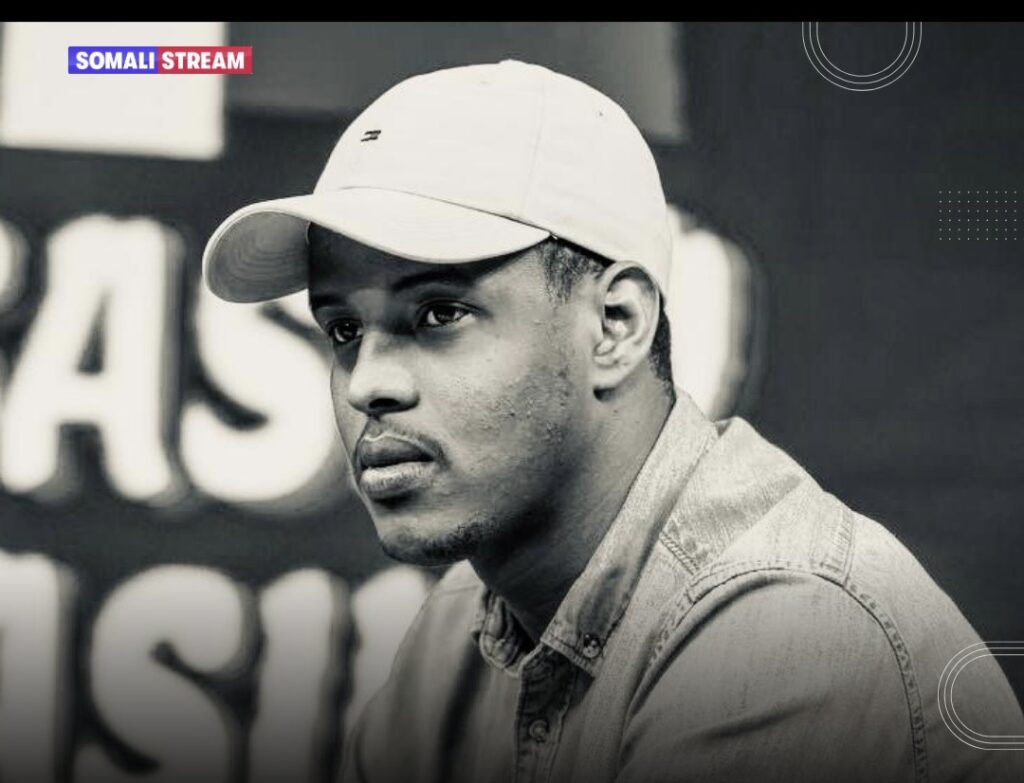
My name is Abshir Rageh. I am a visual storyteller, screenwriter, and film director. My work has always been about stories, finding them, shaping them, and telling them in ways that help us understand who we are, where we have been, and where we may be going. Like many Somalis of my generation, my own story begins in uncertainty.
I was born in the early 1990s, when Somalia’s central government collapsed. My entire life has unfolded in the shadow of that moment. I grew up in a country where instability was not an interruption to normal life, but the norm itself, where movement could come without warning, and change often arrived without explanation. For many of us, uncertainty was not an event. It was an environment.
And yet, through all of that, one message persisted, repeated in homes, in conversations, and in the national imagination: Somalia is rich in oil. It was never just a statement. It was a promise. A promise that beneath our soil lay the answer to decades of hardship. A promise that one day Somalia would rise, transforming instability into dignity, struggle into opportunity, and survival into prosperity.
Today, more than three decades later, that “one day” feels closer than ever. Agreements are being signed. Exploration is advancing. International partners are stepping in. The language of possibility is slowly turning into the language of action.
But progress alone is not enough. The real question is no longer whether oil exists. The question is who will it serve.
Will it serve the Somali people, or once again bypass them?
Somalia’s greatest challenge has never been a lack of resources. It has been a lack of trust. The collapse of the state did not only dismantle institutions, it fractured the relationship between leadership and citizens. That trust has yet to be fully restored. And without trust, even the most promising opportunity risks becoming another source of frustration, division, and disappointment.
This is why the question of oil is not merely economic. It is deeply moral. It is about fairness. It is about inclusion. It is about whether national wealth will translate into national benefit.
Beyond contracts and conferences, there are real lives at stake. There are pastoralists who have lost their livestock to relentless drought. There are mothers walking miles under the sun in search of water. There are young graduates carrying degrees but no opportunities. For them, the question is not abstract. It is urgent and personal. What will this oil change for us?
If this resource cannot be felt in the daily lives of ordinary people, if it does not reduce hardship, create jobs, and restore dignity, then its value will always remain in question.
That is why this moment demands a new approach. It requires transparency, inclusion, and substance over symbolism.
As the Somali government moves forward with oil exploration, including partnerships with countries such as Turkey, the process must be guided by openness and accountability. The Somali people deserve clear answers about what agreements are being signed, who the partners are, what the timelines look like, and how the benefits will be shared.
Silence creates suspicion. Clarity builds confidence.
Citizens are not asking to control every decision. They are asking to be respected, informed, and included. They are asking for something simple yet powerful, trust.
That trust must also be built through opportunity. Somalia’s oil sector cannot become an exclusive space reserved for a connected few. It must open doors for Somali youth, the very generation that has carried the weight of instability for decades.
This means real investment in people through technical training, scholarships, internships, and pathways into employment. It means ensuring that Somali graduates are not spectators to their own country’s transformation, but active participants in shaping it. The wealth of a nation should not leave its people behind.
My own story reflects the contradictions of a generation raised between hope and hardship. In many ways, we were among the unluckiest, growing up without stability, without certainty, without the simple guarantees that define a normal childhood.
But we were also among the fortunate. We survived. Many of us could have been lost to conflict, displacement, or circumstances beyond our control. That reality has shaped how we see the future, with both caution and determination.
I still remember going to school as a child, expecting to return home, only to find that home had changed again. A parent or older sibling would come for me and say we were moving, another house, another neighborhood, another beginning shaped by uncertainty. Sometimes it was because of conflict. Sometimes it was because of fear. Either way, it became a pattern.
Later, I became the one delivering that message to my younger sibling. That is how deeply instability has been woven into our lives, it passes from one generation to the next.
Today, Somalia stands at another turning point. But this chapter cannot be written in silence. It cannot rely on assumptions or vague assurances. It must be grounded in truth.
My generation grew up on promises. We are now old enough and wise enough to ask questions.
We are no longer children listening to hopeful narratives. We are citizens demanding accountability.
For more than three decades, Somalia has seen many leaders, but too few who have built lasting trust. Leadership is not measured by authority alone. It is measured by integrity, transparency, and the ability to serve people above politics.
This responsibility now lies with both Somali leaders and international partners.
To the Somali government, this is a moment that calls for honesty, courage, and inclusion. The people have waited long enough. If oil is truly part of Somalia’s future, then that future must be shared openly with its citizens.
To international partners, Somalia must not be seen only as a frontier of opportunity. It is a nation of resilient people who have endured decades of hardship. True partnership means creating visible value for those people, strengthening local capacity, and contributing to long term stability, not short term gain.
In the end, oil is not just about what lies beneath the ground. It is about what becomes possible above it.
It is about jobs for the unemployed. It is about relief for struggling families. It is about restoring dignity to a nation that has waited far too long.
Somalia is not just exploring oil. It is making a decision about its future.
Will this be another chapter of missed opportunity, or the beginning of something different?
A future built on transparency. A future grounded in trust. A future that includes everyone.
Because Somalia’s true wealth is not only beneath its soil. It is in its people, their resilience, their intelligence, and their unwavering hope.
And this generation is no longer satisfied with promises.
It is asking, clearly and firmly, for truth, inclusion, and change that can be felt in everyday life.
Abshir Rage is a filmmaker and storyteller known for writing and directing Habboon, the first series produced in Somalia, as well as Dhaxal and the Al Jazeera Documentary film Sea Source.