


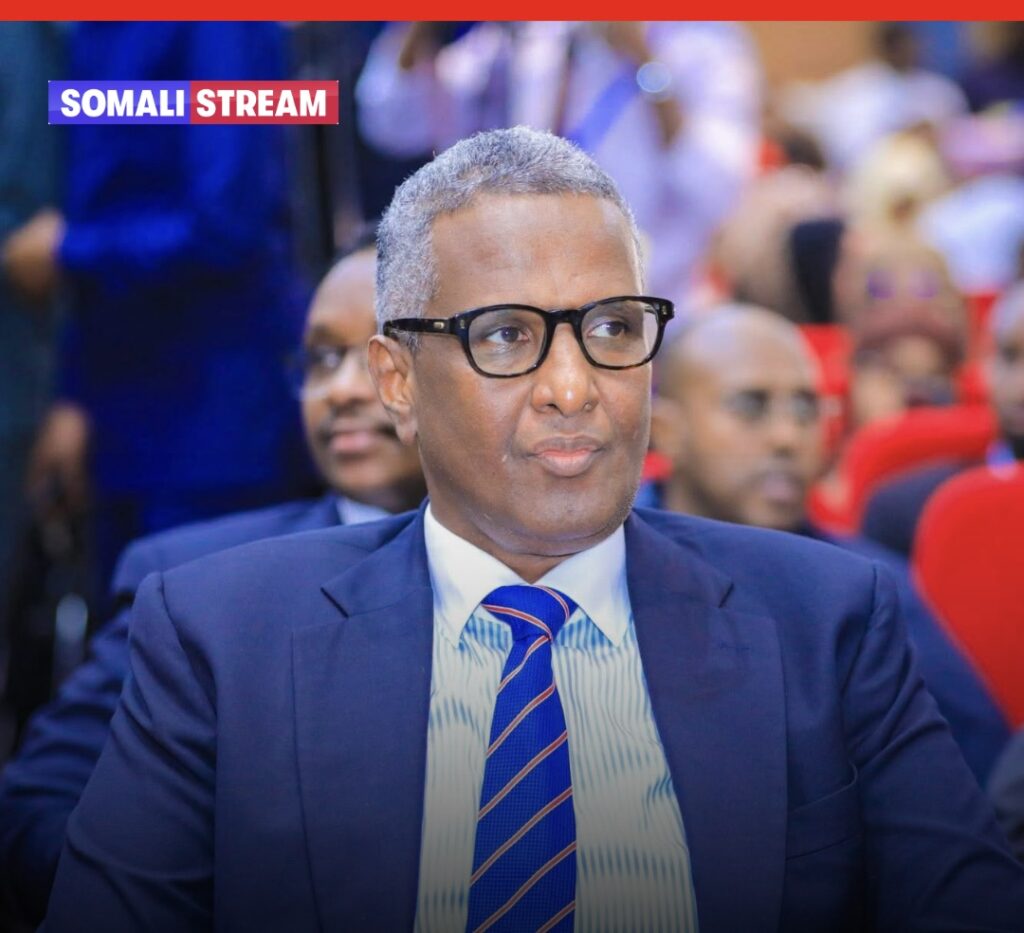
By: Abdirahman Abdishakur Warsame
President Hassan Sheikh Mohamoud entered office with an ambitious, and in many respects necessary agenda. His administration pledged to defeat terrorism, confront corruption, recalibrate federal relations, amend the constitution, reform elections, and reposition Somalia within a volatile regional landscape.
Few Somalis would dispute the importance of these objectives. What has proven destabilising is not the scale of ambition, but the choice to pursue nearly all objectives at once, while privileging loyalty over competence and narrowing decision-making instead of broadening it. In a fragile state where institutions remain weak, politics are negotiated rather than settled, and constitutional time is limited, such simultaneity is not a sign of efficiency. In Somalia’s context, it is a source of risk.
Ambition Without Order
Every fragile state faces a basic structural constraint: the state itself is the bottleneck. Attention, legitimacy, coercive capacity, financial resources, and political capital are limited. When a presidency opens multiple existential fronts at once, it does not merely overwhelm its opponents; it overwhelms the system required to manage those conflicts.
Security operations against Al-Alshabab constitutional changes, coercive approaches toward federal member states, electoral experimentation, foreign-policy realignment, and major economic decisions were all launched in parallel. Each required sustained capacity, political consensus, and institutional focus. None received enough of any.
Reform in fragile states succeeds through sequencing: security creates political space, legitimacy sustains reform, and consensus consolidates authority. That order was reversed.
The Corruption Detour
As pressure accumulated, the culture of governance shifted. Competence, experience, and credibility gradually gave way to loyalty and personal allegiance. Sycophancy replaced honest counsel. Advisers stopped saying no. Errors were defended rather than corrected. What followed was not a single rupture but a steady erosion of internal correction.
It was at this point that the anti-corruption agenda, the moral centre of the presidency began to lose its anchor. The shift did not announce itself through one defining scandal, but through a pattern: centralisation without accountability, discretion without oversight, and urgency used to bypass process. In fragile states, corruption rarely arrives openly. It advances quietly when power concentrates faster than institutions can restrain it.
Public land provides a clear illustration. Urban land, particularly in Mogadishu, is among Somalia’s most valuable national assets. Instead of becoming a test case for transparency, restitution, and rule of law, land allocation increasingly appeared opaque and discretionary. When land becomes a tool for rewarding loyalty or financing political survival, it ceases to be a public asset and becomes a private instrument of power. The result is not only economic injustice, but a deep erosion of trust in the state’s neutrality.
A similar pattern has emerged in public procurement. Emergency justifications, security imperatives, and political urgency have been used to sidestep competitive bidding and institutional review. In a country dependent on donor confidence and public consent, procurement opacity does not merely waste resources; it undermines the credibility of reform itself. When contracts appear to follow proximity rather than process, even defensible decisions lose legitimacy.
Nowhere is this dynamic more dangerous than in the security sector. The fight against Al-Shabaab is both necessary and costly. But when security operations are not insulated from political patronage, they generate what Somalis recognise as security rents: access to arms, logistics, checkpoints, salaries, and protection that can be traded for loyalty or silence. Without strong oversight, war economies do not disappear they migrate into the state.
This is the structural trap: over-centralisation weakens oversight; weakened oversight enables corruption; and corruption then becomes a tool for managing the political pressure created by overreach. As scrutiny receded, corruption ceased to be treated as a problem to be confronted and became a reality to be managed. Nepotism replaced merit.
Favouritism replaced fairness
Decisions once framed as reform were defended as necessities of survival. In such an environment, even truth becomes negotiable.
Centralisation and Institutional Breakdown
Here is a cleaned, clarified, and structurally tightened version, with smoother logic and reduced repetition, while keeping your voice and meaning intact:
What emerged was not simple mismanagement but a governing style increasingly obsessed with domination rather than legitimacy. The administration pursued a strategy of overload, doing too much, too quickly, and without sequencing in the belief that constant pressure would deliver rapid results. Deliberation, process, and institutional safeguards were treated as obstacles rather than protections. This approach relied on perpetual escalation and continuous conflict, creating an appearance of momentum in the short term but inevitably producing decision fatigue, institutional breakdown, unforced errors, and a steady erosion of strategic focus.
Over time, decision-making narrowed instead of broadening. Authority that should have rested with institutions was drawn into the presidency itself. Security management, diplomacy, federal relations, engagement with political opposition, elections, and crisis response increasingly flowed through a single office. Villa Somalia ceased coordinating the state and began substituting for it. What had once been external crises moved inward; chaos no longer remained episodic it became structural.
Legitimacy at the Edge of Time
This institutional strain now collides with the reality of time. The president has less than three months remaining in his constitutional mandate. Yet the administration is attempting to manage a convergence of crises: a prolonged war against Al-Shabaab; a controversial unilateral constitutional revision; intensifying federal–state tensions; foreign-policy disputes involving Somaliland and recognition challenges linked to Israel; and the fallout from cancelled agreements with the United Arab Emirates triggering complex regional realignments.
Domestically, the government is pushing disputed plans for “one person, one vote” elections while simultaneously negotiating a possible extension of the very mandate now nearing expiration. No presidency particularly in a post-conflict federal system can sustain this level of overload without losing coherence and credibility.
Compounding the problem is a political culture built on transactional alliances rather than durable political foundations.
When interests fade, support evaporates. Many politicians, former allies, and even regional partners are already positioning themselves for the next political dispensation rather than defending the current one.
Under this pressure, the presidency appears increasingly inclined toward extending its mandate, framing extension as necessary to resolve unfinished business. This logic reverses constitutional order. Mandates are not extended to correct overreach. Overreach is corrected to protect the mandate.
If Somalia reaches 15 May without a consensual electoral arrangement, the country risks its most serious constitutional vacuum in more than a decade. Such a vacuum would not be merely procedural; it would be political—inviting competing claims to authority, institutional paralysis, and renewed fragmentation. Once legitimacy is contested, it is extraordinarily difficult to restore.
Yet this moment also presents a narrow but consequential opportunity. The forthcoming conference between the Federal Government and the Future Council can and should serve as a forum to agree on a realistic, consensual electoral model that preserves constitutional continuity and avoids a vacuum. This is not the time for unilateralism or procedural brinkmanship. It is the time for negotiated compromise.
Somalia’s partners and allies have a critical role to play. They must move beyond statements of concern and actively support an agreement politically, diplomatically, and technically. Allies need a legitimate government with a clear mandate to engage. Adversaries, by contrast, benefit from ambiguity, contested legitimacy, and institutional breakdown. Fragmentation advances their strategic aim of weakening, and ultimately balkanising, the Somali state.
Opposition at this moment is not obstruction. It is constitutional responsibility. The path forward is clear: pause unilateral constitutional initiatives; return authority to institutions; negotiate an electoral framework in good faith; and preserve continuity through consent rather than prolongation.
Somalia’s future will not be secured by speed, concentration of power, or mandate extension. It will be secured by restraint, sequencing, and legitimacy. History will judge this moment not by the scale of ambition, but by whether constitutional order was protected when it mattered most.
The choice is stark: negotiation or vacuum, legitimacy or improvisation, state continuity or systemic rupture.
That choice must be made now.
Abdirahman Abdishakur Warsame is the Leader of Wadajir Party and Presidential Candidate for Somalia’s upcoming elections. Views expressed in this article are those of the author and do not reflect the opinions of Somali Stream.