


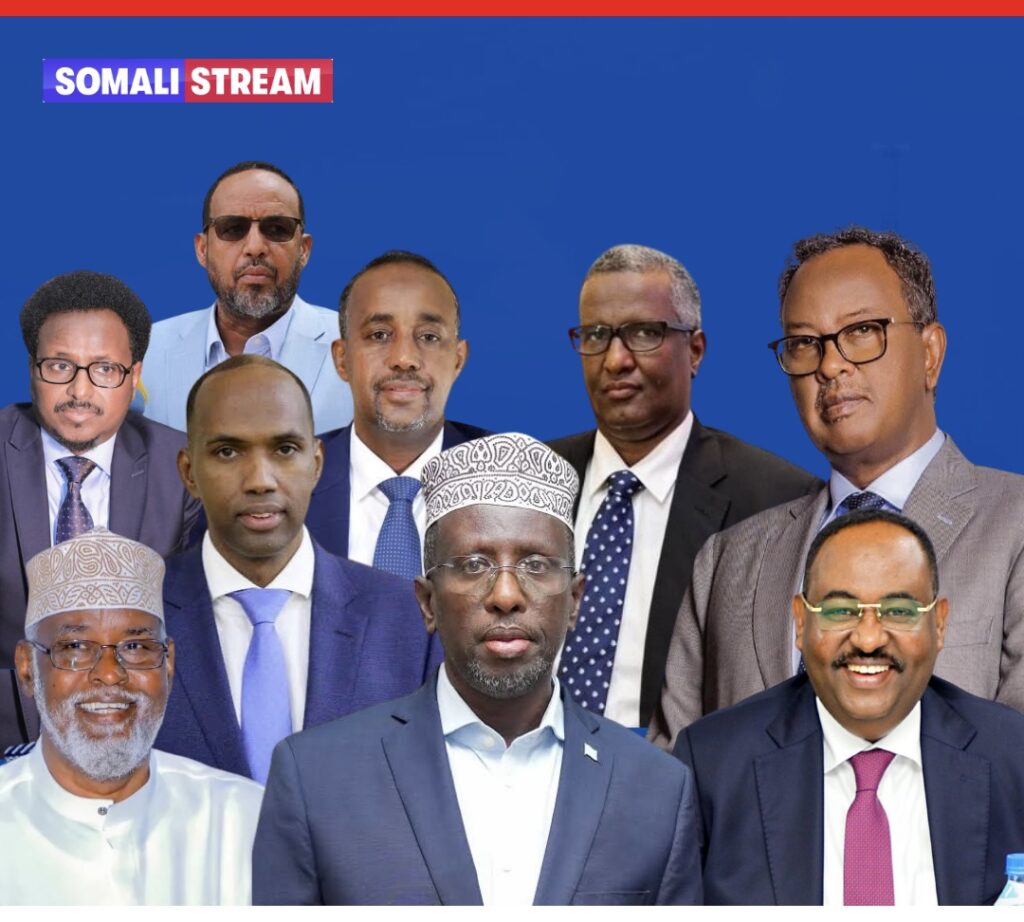
Somalia’s political landscape appears to be entering a critical phase of recalibration as key political actors signal a renewed willingness to engage in dialogue amid mounting domestic and international pressure.
On Friday, 23 January, the President of the Puntland State of Somalia, Said Abdullahi Deni, a key figure of the Somalia Future Council which also consists of Jubaland, held a high-level meeting in Nairobi with representatives of the international community, underscoring the intensity of diplomatic engagement surrounding the country’s fragile political transition.
The meeting brought together ambassadors from the United Nations, the European Union, the United Kingdom, Denmark, Norway, Canada, Germany, and Sweden, alongside senior diplomats from the embassies of the United States, Switzerland, Finland, France, and the Netherlands, as well as representatives of the World Bank.
Discussions centered on Somalia’s evolving political dynamics, relations between the Federal Government and federal member states, and the broader implications of prolonged political uncertainty as the country moves closer to the 2026 electoral cycle.
This diplomatic outreach comes against the backdrop of increasing concern among international partners over the risk of political stagnation and institutional erosion. As the mandates of constitutional bodies near expiration and debates persist around term extensions and constitutional reform, external actors have intensified their calls for restraint, inclusivity, and dialogue among Somali leaders.
Several ambassadors representing the international community in Somalia have publicly on their social media platforms and privately urged the Somali opposition and national leadership to attend the meeting convened for 1 February by President Hassan Sheikh Mohamud, framing the gathering as a critical opportunity to de-escalate tensions and restore political confidence. Diplomatic sources stress that broad participation is essential to preventing further polarization and safeguarding stability during this sensitive period.
Within this charged environment, Somalia’s Future Council is now poised to take a decisive step that could alter the trajectory of the ongoing political impasse. A crucial meeting of the Council’s members is scheduled to take place in Nairobi, where a landmark decision is expected regarding the dialogue initiative extended by the Federal Government.
Well-informed sources have confirmed to Somali Stream that the majority of Council members are leaning toward accepting the government’s invitation, marking a notable shift in posture after weeks of skepticism.
This change is widely attributed to the strong endorsement the dialogue has received from the international community, as well as growing recognition among Council members that the country’s current political fragility demands a negotiated solution rather than continued confrontation.
Despite lingering reservations among some figures within the Council’s leadership, there is an emerging consensus that the opportunity for dialogue should not be squandered. Most members reportedly favor giving the government’s initiative a chance, arguing that engagement, however imperfect, offers a better pathway toward de-escalation than prolonged disengagement.
The prevailing sentiment within the Council appears to align with the will of the majority, who are increasingly eager to explore avenues for political rapprochement in order to avert further instability as the election timeline draws nearer.
Preliminary discussions also indicate that, should the Council formally endorse participation in the talks, a Technical Committee will be established to manage the next phase of engagement with the Federal Government.
This committee is expected to focus on negotiating the framework of the dialogue, including agreement on the official agenda, the venue, and the timing of the talks, while also insisting that the process remain a direct bilateral engagement between the Federal Government and the Future Council, rather than an open-ended, multi-stakeholder forum. Such conditions reflect the Council’s desire to ensure clarity, structure, and political seriousness in any forthcoming negotiations.
Taken together, these developments suggest the possibility of a political turning point. The anticipated outcome of the Future Council’s Nairobi meeting could open the door to a new phase of dialogue capable of breaking the deadlock that has characterized recent months of Somali politics.
As the country approaches the May 2026 elections under the shadow of expiring mandates, contested reforms, and heightened public anxiety, the convergence of international diplomatic pressure, federal outreach, and opposition engagement may offer a narrow but consequential window for political stabilization, one that many observers believe Somalia can ill afford to miss.