


By Mustafa Osman Farah
Key Developments and Recent Counter-Terrorism Responses
The period between 2021 and 2025 has seen IS-Somalia transition from a long-standing low-profile threat to a globally significant node within the ISIS network.
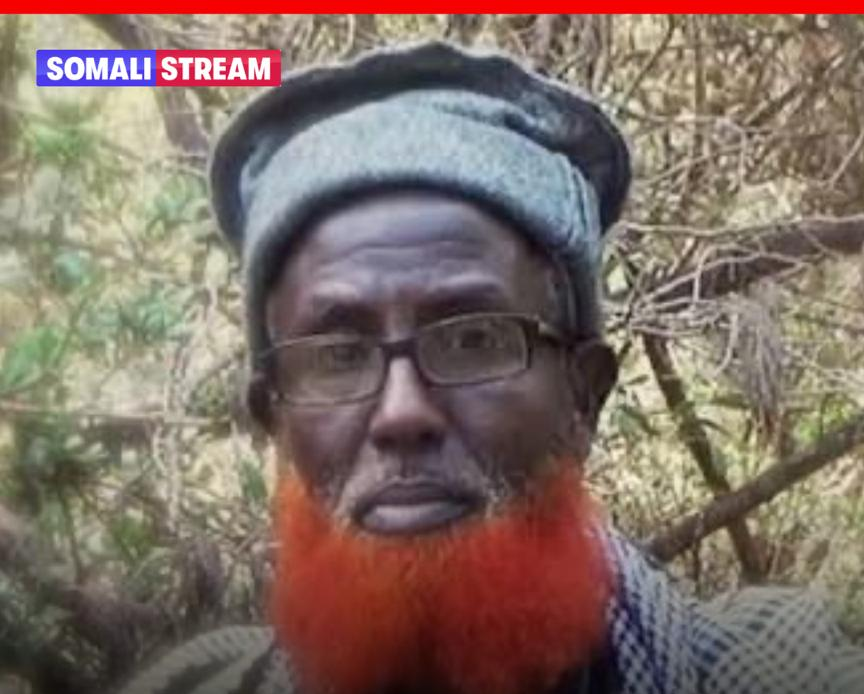
IS-Somalia founder Abdulqadir Mumin has achieved elevated status within the global Islamic State leadership, becoming a key figure and potentially the organization’s worldwide leader.
This represents a remarkable turn for the small Somali branch, significantly raising its international profile and operational priority within ISIS central command. Mumin’s elevation and IS-Somalia’s financial success have created a self-reinforcing cycle, attracting more resources and attention from the central leadership, thereby enhancing the branch’s capability and justifying its strategic importance.
However, the organization has also suffered setbacks, including the targeted killing of Bilal al-Sudani in a U.S. raid in January 2023. Al-Sudani was a senior Somalia-based ISIS leader who facilitated the travel of foreign recruits and financing.
Major Operational Activity (2024–2025)
The counterterrorism campaign in Puntland reached a major inflection point between December 2024 and February 2025, driven by Operation Hillaac (Lightning). This sustained, intelligence-driven military offensive, executed by Puntland security forces (Puntland Darawish army, Puntland Maritime Police Force, and Counter-Terrorism Police) with crucial technical and air support from the United States (U.S.) and the United Arab Emirates (UAE), aimed to dismantle the foundational strongholds of the Islamic State in Somalia (IS-Somalia.
IS-Somalia, which emerged in late 2015 as a breakaway faction from Al-Shabaab, maintains its primary operational presence exclusively in the remote, rugged terrain of the Golis and Cal Miskaad Mountains within the Bari region of Puntland. This rough topography, characterized by cave systems and remote villages, historically provided crucial defensive sanctuary against counter-military action.
Pre-Hillaac estimates placed the operational strength of IS-S far below that of its rival.
U.S. defense estimates suggested the group fielded approximately 900 to 1500 fighters. The high dependency on foreign recruitment confirms the group’s function as an attractive, accessible hub within the broader Islamic State global network, attracting fighters from Yemen, North Africa, Tanzania, and Ethiopia. IS-Somalia promotes a distinctly transnational jihadist vision, actively marketing Somalia as the “Land of Migration and Support” (Ard Al Hijra wa Al Madad), framing it as a pivotal base for the global caliphate agenda.
Operation Hillaac was designed not as a periodic raid but as a persistent, multi-phased military offensive. Puntland mobilized thousands of security forces for the sweep of the mountains. The campaign’s operational effectiveness was heavily reliant on external enablement: the UAE provided armed drone strikes and crucial close air support, while the U.S. Africa Command (AFRICOM) provided high-value target (HVT) airstrikes.
Operation Hilaac: The Campaign in Puntland’s Cal Miskaad Mountains
In late 2024, Puntland authorities launched a major offensive—codenamed Operation Hilaac—against the ISSomalia presence in the rugged terrain of the Golis/Cal Miskaad mountain ranges of Bari region. The campaign unfolded in sequential phases: an initial IS strike, a clearance and capture phase, decisive battles, and a prolonged mopup/adaptation phase.
December 31, 2024 – Preemptive Strike
On 31 December 2024, ISSomalia executed a coordinated attack in the Dharjaale area of the Cal Miskaad range. The assault involved multiple suicidevehicle borne improvised explosive devices (SVBIEDs) followed by an infantry surge of roughly twelve inghimasi fighters (suicide infiltrators).
According to IS propaganda outlets, the attackers came from seven different countries, underscoring the transnational nature of the group’s composition. The strike failed to break the Puntland lines, but it served as a catalyst for the broader offensive.
January 8–13, 2025 – Clearance and Capture
Between 8 and 13 January, Puntland Darawish infantry units undertook coordinated operations across key valleys and ridgelines. Over this fiveday span they captured eight ISSomalia bases and training camps, including the strategically positioned village of Turmasaale on the entrance to the Togga Jeceel valley corridor which had served as a logistics and staging hub. The operation seized arms depots, communications equipment and supply stores, significantly degrading the enemy’s infrastructure. These manoeuvres disrupted ISSomalia’s entrenched supply lines and command structures in the mountains.
February 2025 – Decisive Battles
February marked the campaign’s most intense phase. On 1 February, a USled airstrike targeted cave complexes some 50 miles southeast of Bosaso, killing senior ISSomalia operative Ahmed Maeleninine described by U.S. AFRICOM as a recruiter, financier and planner of external operations. Witnesses placed the strike in the Cal Miskaad network.
On 10–11 February, ISSomalia attempted a major counterattack in the Togga Jacel (also spelled Togga Jeceel) valley. Supported by aerial surveillance drones (provided by the UAE) and guided by intelligence assets, Puntland forces repulsed the assault. ISSomalia incurred heavy losses; some reports estimated the death toll at around 70 militants in a single day. Public sources confirm “scores” killed, though give lower numbers, at least 57 militants in 24 hours during early February. Also, Puntland suffered heavy casualties in this phase: around 100 personnel lost during the February engagement as primary sources confirmed
March 2025 to Present — MopUp and Adaptation; Following the losses of fixed bases, ISSomalia shifted tactics. The group fragmented into small mobile cells of 10–20 men operating across valleys such as Tog Miraale, Tog Curaar and Karinka Qandala.
Fixed positions gave way to guerrilla warfare: ambushes, landmines and IEDs aimed at inflicting casualties and slowing the advance of Puntland forces. Among the notable casualties in this phase was Brigadier General Ahmed Abdi Ali Qarjab (“Gen. Qalyare”) who was killed when his convoy triggered a landmine explosion in Qnadala Area.
Puntland forces declared they had reclaimed approximately 250 square kilometres of terrain from ISSomalia’s control and captured some 50 bases by early February, according to Reuters. These advances forced ISSomalia out of largescale positions, though the insurgent threat remains active in the mountains.
Puntland authorities also issued warnings to nomadic communities in the Cal-Miskaad region to temporarily relocate due to explosiveremnant and clearance operations. Meanwhile, ISSomalia’s shift to asymmetric operations particularly mines and ambushes make it clear the group remains capable of significant disruption even without territorial strongholds.