


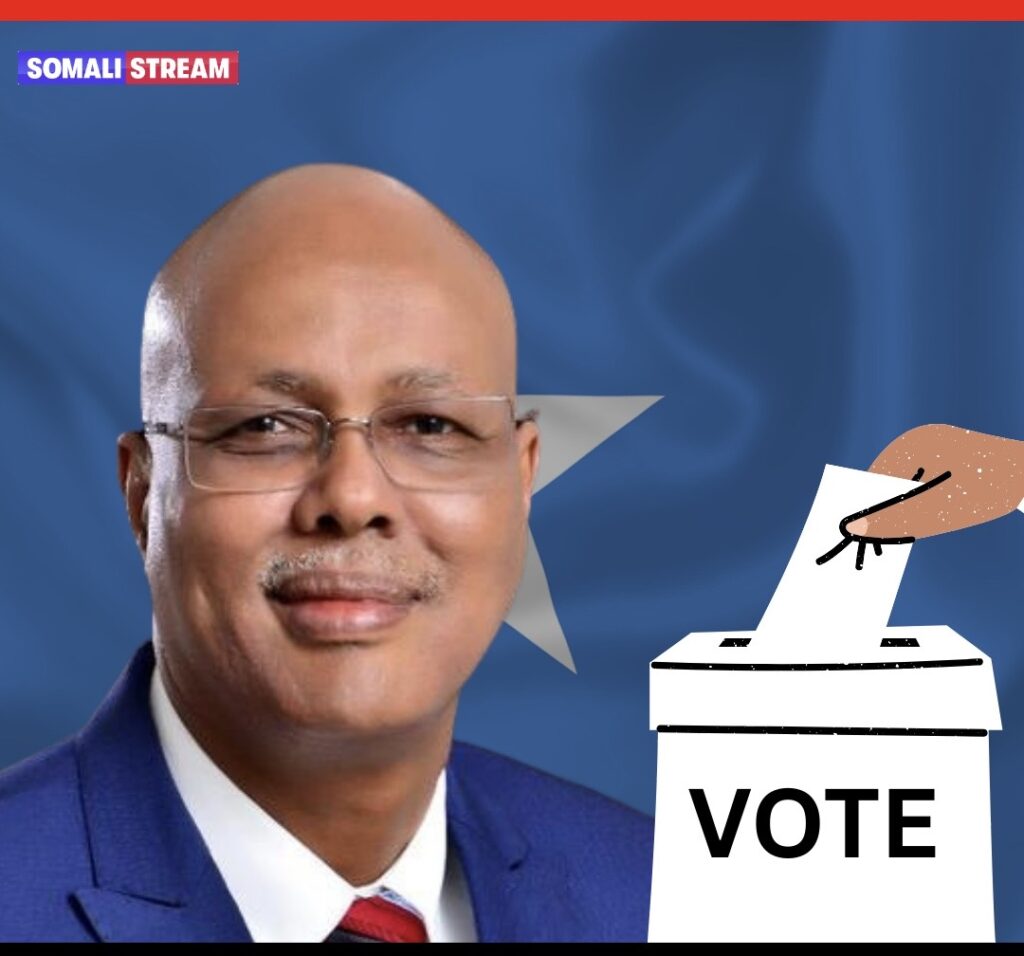
The election of 2026 is not going to be simply a transfer of political power; it is a test of whether the State of Somalia can govern itself, and therefore, Somalis and the international community will be watching.
“Walaalo colloobay way xoolo yarayeen, wayna xabaalo badiyaan.”
When brothers (or sisters) fight, they reduce their wealth and increase their number of graves.
In the days following Israel’s unilateral and illegitimate recognition of Somaliland, I found myself returning to this sage Somali proverb that serves as a grave warning for this moment.
2026 is set to be a consequential year for Somalia’s future. Political leaders in Somalia need to realise that the 2026 elections are not ordinary; they are not just another transfer of power or another iteration of the usual elite bargaining. Since the Israeli government recently announced its recognition of Somaliland, the 2026 elections represent a test as to whether Somalis can galvanise to defend recent assaults on our sovereignty.
If the electoral process in Somalia becomes mired in a prolonged crisis, the message sent to the world will be very simple: we cannot govern ourselves, our sovereignty is negotiable, and our internal divisions can be used to the advantage of external actors. We cannot afford to give the world this message.
Why Are These Elections Different?
Israel’s recent illegitimate recognition of Somaliland should help put to rest any illusions that the divisions within Somalia are solely internal matters. Our adversaries view the divisions within Somalia as opportunities for exploitation to advance their neocolonial agendas. We must wake up to the fact that we are being watched, mapped, and acted upon by external actors with their own geostrategic interests at stake.
The timing of this recognition is also not coincidental. We are experiencing the collapse of the post-World War II global order, and in doing so, the foreign powers are beginning to abandon the basic principles of international law regarding borders, which include the principle that borders should not be changed by force. In a multi-polar world, fragmented, divided and fragile countries are not given the luxury of time to work out their problems. Instead, they are often viewed as incoherent, and their territory is quietly coveted by interested outsiders. Furthermore, their sovereignty is viewed as a convenience, rather than an inviolable right.
Therefore, the manner in which Somalia holds its 2026 elections is of much greater importance to the Somali public and international community than previous elections have been. A credible and peaceful electoral process indicates a level of political and democratic maturity and social cohesion. A contested, chaotic, or manipulated electoral process, regardless of the winner, will indicate the opposite and invite additional challenges to Somalia’s sovereignty and unity.
Lessons learned from previous elections
As the 2026 elections approach, it is necessary to examine some difficult questions. After more than thirty years of attempting to build a stable state, why is Somalia’s democratic process still so fragile? What did we do wrong? Did we learn anything from our mistakes? Do we still view political competition as a form of existential war, rather than a normal part of the life of a republic?
No Somali election since the formation of the Federal Government of Somalia in 2012 has taken place without significant controversy, delays, and legitimacy concerns.
The electoral timeline has been extended multiple times. Indirect selection processes have included accusations of vote buying and clan manipulation. Disputes over elections have worsened relations between the federal government and the federal member states. The history of Somali elections is consistent: elections become battlegrounds for zero-sum competition, rather than a mechanism for the peaceful transfer of power.
This history has consequences. Every disputed election weakens public and international confidence in Somalia’s institutions. Every delay sends a signal that the state is dysfunctional. Every crisis that draws in external mediators, whether it is the United Nations, the African Union, regional organisations, etc., reinforces the perception that Somalia cannot self-govern.
Fortunately, until now, the international community has maintained its commitment to Somalia’s sovereignty and territorial integrity. However, fortune alone for Somalia is not a viable long-term strategy. As long as we present ourselves as institutionally weak, we will invite actors who believe that our internal divisions are opportunities for exploitation.
Electoral integrity as a sovereignty issue
Somalia’s political class frequently overlook the fact that we must comply with certain internationally recognised standards of behaviour if we want to be considered credible participants in the global system. Electoral integrity is one such standard.
Electoral integrity extends beyond the act of voting on election day to encompass the entire electoral process. Each stage of the electoral process must occur without discrimination, favouritism, fraud, vote-buying and rigging.
As a result of Israel’s recognition of Somaliland, the principle of electoral integrity is not a nice-to-have but a strategic imperative. A government that emerges from a credible electoral process earns legitimacy that cannot be replaced by external recognition. A government that emerges from a disputed electoral process, regardless of who comes out on top, will possess reduced legitimacy to advance national interests, defend itself against adversaries, and have insufficient political capital to achieve national unity.
In today’s world, legitimacy is not a luxury. It is a protective shield behind which we defend our sovereignty.
The risks we face
Let us consider the implications of a failed electoral process in the current context.
Al Shabaab is the most powerful violent extremist organisation operating in the Horn of Africa. It benefits greatly from political fragmentation and institutional weakness. A protracted electoral crisis will create opportunities for Al Shabaab to pursue its agenda. Simultaneously, Israel’s recognition of Somaliland provides Al Shabaab with a propaganda gift to portray engagement by external actors as encirclement and betrayal in a society where solidarity with the Palestinian cause is widespread. The more that Somalia is seen as politically dysfunctional, the larger this narrative will grow.
Beyond the extremist threat, Somalia risks becoming drawn into broader regional and global conflicts it cannot control or afford. The Red Sea crisis has already drawn major powers into a posture of military preparedness in the waters adjacent to Somalia. Any new alignment (perceived or real) can expand the theatre of conflict surrounding the Horn of Africa. If we Somalis are unable to resolve our internal disputes, we will have limited ability to navigate these risks.
And then there is the Somaliland issue itself. While Israel is the only UN member state to recognise Somaliland, the African Union, the United Nations, the European Union, the Arab League, and other key partners have reaffirmed Somalia’s sovereignty and territorial integrity. However, this support for Somalia’s sovereignty is not unconditional. It is based, in part, on the expectation that Somalia is a functioning state capable of addressing internal matters through legitimate political processes. If our electoral process in 2026 becomes chaotic, this solidarity may be undermined.
A path forward
So, what needs to be done?
First, Somalia’s political leadership, representing the Federal Government of Somalia, the Federal Member States, and the opposition, must recognise that the 2026 elections represent a collective test and shared responsibility of demonstrating whether our country can shepherd a smooth, credible and fair elections rather than one filled with irregularities, vote-buying and rigging. The idea that elections are only fair when you win and unfair when you lose must be rejected. Somalia’s 2026 elections will be watched closely by friends and foes alike, necessitating that political actors put aside differences to ensure a smooth transfer of power, given the precarious situation our nation finds itself in.
Second, due to the multitude of threats to Somalia’s sovereignty, territorial integrity, and security, we must seriously consider whether the modus operandi of past electoral practices is sufficient for this moment in time. There is a reasonable argument for a short-term, non-political caretaker government comprising neutral, high-integrity figures, focused on holding credible, fair elections and ensuring the continuity of critical public services.
Any such arrangement will depend on the presence of well-respected, credible individuals who are viewed as relatively neutral, who agree to abide by specific timeframes, and who agree not to compete in the elections that they oversee. This is not a new concept in democratic transitions, as can be seen in Bangladesh’s current and past caretaker governments. Rather, it represents an understanding that extraordinary situations require extraordinary measures to safeguard electoral legitimacy and, by extension, Somalia’s sovereignty.
Third, Somalia must immediately convene a true National Consultative Conference – not a conference of rhetoric, but a serious attempt to improve the relationship between the political leadership of Somalia and to de-escalate tensions between Mogadishu and the Federal Member States, and to establish consensus on the electoral arrangements that all sides agree to follow.
Finally, Somalia’s political class must remember that electoral politics exists to serve the people, not the other way around. Millions of Somalis face drought, displacement, and food shortages. Their suffering should not continue because of electoral wrangling.
We have seen this before. In previous elections, the business of government ground to a halt as incumbents turned their attention to political survival, often a year before elections. Government institutions failed to perform, with the most vulnerable Somalis paying the ultimate price.
This must not happen again. Between now and the end of their mandate in May 2026, current officeholders have a responsibility to govern fully and without distraction.
And what comes after. This is precisely why Somalia needs a caretaker arrangement following May 2026, not merely to oversee elections, but to ensure that the functions of government do not collapse in the lead-up to them.
The choice before us
The Somali Youth League once galvanised a divided Somalia around a unifying idea: that Somalis belonged to a single political community and deserved sovereignty over our lands. This spirit must be revived, not as a nostalgic dream, but as a strategic necessity.
Future generations will judge us not by our good intentions. Instead, they will judge us by whether we met at this moment.
The choice is ours. We can conduct a credible election that demonstrates to the world that we are more than capable of governing ourselves, that our sovereignty is inviolable, and that our divisions will not be exploited by those who mean to cause us harm. Or we can descend into another cycle of dispute, delay and dysfunction, diminishing our wealth and multiplying our graves.
By Abdiweli Sheikh Ahmed, Former Prime Minister of Somalia