


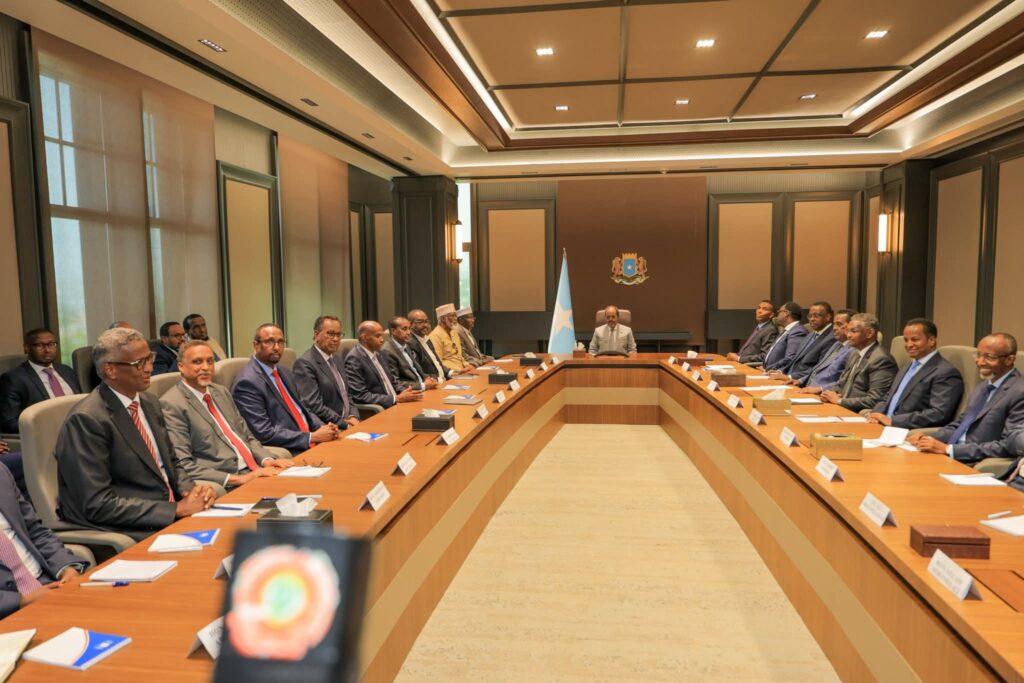
Talks between Somalia’s Federal Government and opposition leaders have formally concluded without reaching an agreement, deepening an already tense political standoff. The Villa Somalia negotiations, which were aimed at resolving key disputes over the country’s electoral framework, ended in deadlock after both sides failed to find common ground on the way forward.
At the center of the dispute is the electoral model.
The Federal Government is pushing for a one-person, one-vote system, arguing that it would mark a significant step toward democratic reform.
However, opposition groups have rejected the proposal, insisting instead on maintaining an indirect electoral process similar to previous models, citing logistical, security, and time constraints.
President Hassan Sheikh Mohamud’s administration has indicated plans to proceed first with local council elections before organizing federal polls.
With the current presidential term nearing its end on 15th May, the lack of consensus risks plunging the country into a constitutional and political crisis if an agreed-upon framework is not reached in time.
Meanwhile, Puntland and Jubaland, in coordination with the Salvation Forum, are reportedly preparing to move ahead with a parallel electoral process.
The prospect of competing electoral tracks has raised concerns among political observers about further fragmentation and instability unless urgent dialogue resumes between all stakeholders.