


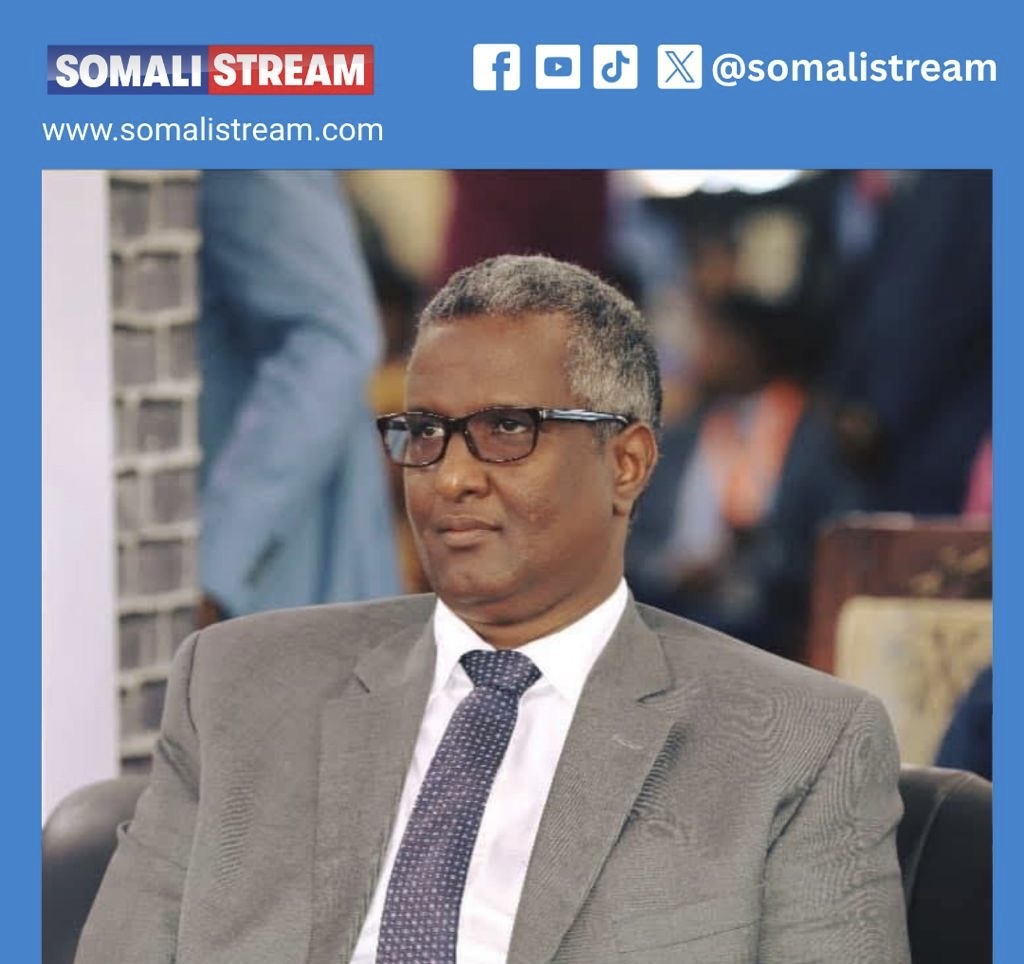
By: Abdirahman Abdishakur Warsame
Somalia is entering a dangerous and unprecedented political moment. For the first time since the country began rebuilding its state institutions after decades of collapse, it now faces the prospect of operating under two competing constitutional frameworks: one advanced by the federal government through recent amendments, and another the 2012 Provisional Constitution defended by a coalition of opposition leaders and two federal member states.
This is not merely a legal disagreement. When competing constitutional claims arise, the consequences reach far beyond institutional debate. Authority becomes contested, political legitimacy begins to erode, and disputes that originate in the political arena risk spilling into the security sphere. For a country with fragile institutions and a recent history of political breakdown, such uncertainty carries serious and far-reaching risks.
The contested constitutional amendments adopted by Parliament on March 4, 2026, in a session lacking the required quorum, have already faced broad rejection across Somalia’s political landscape. The federal member states of Puntland and Jubaland have formally refused to recognize the outcome. In addition, opposition leaders including former heads of state and government, as well as several influential national political figures have publicly voiced strong objections to both the process through which the amendments were adopted and their substantive implications.
This rejection is not simply a matter of partisan politics. It reflects deeper concerns about constitutional procedure, political legitimacy, and the long-term stability of the Somali state.
When Constitutional Process Breaks Down
Constitution-making is never politically neutral. It is shaped by institutional constraints, competing interests, and the mechanisms through which collective decisions are reached. When procedures are respected and ratification is credible, constitutional reform can reflect careful deliberation and broad national settlement. When those safeguards are ignored, however, constitutional change risks becoming an instrument of short-term political advantage.
Opposition to the recent amendments converges around four central concerns.
First, the failure to follow established constitutional and parliamentary procedures. In fragile states, procedural legitimacy is not a technical detail it is the foundation of political authority.
Second, the absence of meaningful public consultation on amendments that fundamentally reshape the constitutional order.
Third, the lack of agreement among key political stakeholders, particularly federal member states, in a system designed around negotiated federal compromise.
Fourth, the failure to meet the constitutionally required parliamentary quorum.
To clarify the facts, the Somali Future Council conducted an independent verification of the parliamentary session that claimed to approve the amendments. The Council is a coalition that includes Puntland, Jubaland, presidential candidates, and several prominent national political figures.
A committee of lawmakers reviewed official attendance records and directly contacted 114 members of the House of the People and 20 Senators to confirm whether they had been present during the session. The findings were clear.
The session was attended by 161 members of the House of the People and 34 senators, falling short of the constitutional requirement. Under Somalia’s constitutional framework, amendments require a two-thirds quorum in each chamber at least 184 members of the House of the People and 36 senators present.
The Speaker of Parliament has argued that some lawmakers participated electronically, suggesting that virtual participation compensated for the absence of quorum. Yet constitutional quorum requirements are based on physical presence, and remote participation does not resolve the underlying legal requirement for members to be present in the chamber.
Further doubts arise from the claim that all 222 members reportedly present voted in favor of the amendments, with no abstentions and no votes against. In any functioning parliamentary system particularly during debates over consequential constitutional change such unanimity without dissent or abstention is highly improbable and raises additional questions about the accuracy of the reported proceedings.
By constitutional standards, the quorum required to amend the constitution was not met.
The Danger of Competing Constitutional Orders
The central concern surrounding the amendments is not merely procedural it is substantive. The sequence of events suggests that the amendments are being used to extend the current political mandate.
Under the existing constitutional framework, the mandate of the Federal Parliament expires on 14 April, while the President’s term concludes on 15 May of this year. These timelines are clearly defined under the 2012 Provisional Constitution, which established a four-year electoral cycle.
However, the newly adopted amendments introduce a five-year term for both Parliament and the Presidency. Shortly after the amendments were announced, the Speaker of Parliament, Sheikh Adan Mohamed Nur, stated publicly that the mandates of both institutions would now run for five years under the revised constitution.
This interpretation is far more than a technical clarification. It signals a clear attempt to justify extending the tenure of the current administration beyond its originally defined constitutional limit. The implication is evident: the constitutional changes are being used to enable the current leadership to remain in office until May 2027, effectively adding an additional year to the existing mandate instead of adhering to the constitutional deadline of May 2026.
Such an approach would require applying the amended constitution retroactively, allowing current officeholders to benefit from rules adopted after their election.
This runs counter to one of the most fundamental principles of constitutional governance. Constitutions—and constitutional amendments—are designed to regulate future political arrangements, not to alter the legal terms under which incumbents were elected.
Retroactively changing those terms in order to prolong the tenure of those already in power undermines electoral legitimacy and erodes public confidence in the constitutional order.
For this reason, the Somali Future Council, together with a broad coalition of opposition leaders and federal member states, maintains that the presidential mandate must conclude in May 2026, and that any attempt to extend it without a negotiated electoral agreement would cross a constitutional red line.
If the dispute remains unresolved, Somalia risks entering an unprecedented situation in which two competing constitutional frameworks operate simultaneously.
Such ambiguity weakens institutional authority, blurs the legal basis of governance, and complicates preparations for the next electoral cycle. In fragile political systems, competing constitutional claims rarely remain confined to legal debate. They often spill into the political and ultimately the security arena.
Lessons from the 2021 Crisis
Somalia has already seen where constitutional disputes can lead.
In 2021, disagreements over the expiration of the presidential mandate and the absence of an agreed electoral framework triggered armed standoffs in Mogadishu. Security forces aligned with rival political actors confronted one another in the capital, bringing the country close to renewed instability.
The crisis was ultimately resolved through negotiation and compromise. Yet the lesson remains unmistakable: constitutional disputes, if left unresolved, can quickly evolve into security crises.
History rarely repeats itself exactly. But it often rhymes.
Early Warning Signs
There are already indications that rising political tensions are beginning to influence the security environment in Mogadishu. Recent plans to adjust security deployments in the capital including the creation of units closely aligned with the presidency and the repositioning of forces around key strategic locations such as major intersections and areas associated with opposition activity have raised concern among opposition figures.
At the same time, several security units previously responsible for maintaining stability in the capital are being redeployed outside the city.
Governments often recalibrate security deployments during periods of uncertainty. Yet such moves inevitably shape political perceptions. In the current context, they signal to many in the opposition that preparations may be underway for the possibility of confrontation rather than accommodation.
These developments are unfolding alongside growing dissatisfaction within segments of the Somali National Army. Long-standing grievances including low salaries, concerns about corruption and nepotism in promotion practices, and the displacement of military families during large-scale evictions from public land have contributed to declining morale.
Humanitarian organizations estimate that more than 260,000 families have been displaced in recent eviction campaigns, among them families of serving soldiers.
When unresolved political disputes intersect with frustration inside security institutions, the risks become significantly more serious.
The Stakes for Counterterrorism
A political crisis in Mogadishu would not remain confined to elite politics. Somalia’s campaign against Al-Shabaab depends heavily on coordination among federal institutions, regional authorities, and international partners.
Counterterrorism in a federal system requires political cohesion, shared intelligence, operational cooperation, and public confidence in national institutions.
When political actors turn inward toward domestic confrontation, counterterrorism efforts inevitably suffer. Extremist organizations often exploit the resulting security gaps.
Political fragmentation therefore threatens not only governance but also the strategic foundations of Somalia’s fight against violent extremism.
A Moment for Statesmanship
Somalia today stands at a constitutional crossroads. The country already faces multiple pressures: economic fragility, climate shocks, regional instability, and ongoing security threats. When such pressures converge, crises rarely occur one at a time they collide.
Avoiding that collision requires leadership grounded in restraint rather than ambition.
Somalia’s political leaders must recognize that constitutional disputes cannot be resolved through unilateral action. They must return to negotiation and pursue a broad-based electoral agreement anchored in constitutional norms.
Yet responsibility does not rest with politicians alone. Somalia’s business community, civil society organizations, traditional elders and its international partners all have a role to play in encouraging compromise and preventing escalation.
But ultimately, the responsibility for preventing a repeat of past crises rests with the country’s leadership.
Somalia’s recent history offers a clear warning. In 2021, disagreements over electoral procedures and the extension of political mandates pushed the country to the brink of confrontation. Armed forces aligned with competing political actors faced each other in the streets of Mogadishu. The crisis was only defused through dialogue and compromise.
President Hassan Sheikh Mohamud is well aware of those events. He witnessed firsthand how quickly electoral disagreements can escalate into national crisis and how costly such confrontation can be for a fragile state.
That experience should now serve as a guide. The choice before the President is therefore not merely political it is historical.
He can insist on a unilateral constitutional course that risks deepening division and pushing the country toward confrontation.
Or he can exercise statesmanship, return to dialogue with political stakeholders, and help secure an electoral agreement that preserves constitutional legitimacy and national stability.
The future of Somalia’s fragile political order may depend on which path he chooses.
Abdirahman Abdishakur Warsame is a member of the Somali Federal Parliament, an opposition leader, the chairman of the Wadajir Party, and a presidential candidate in the forthcoming elections of 2026.