


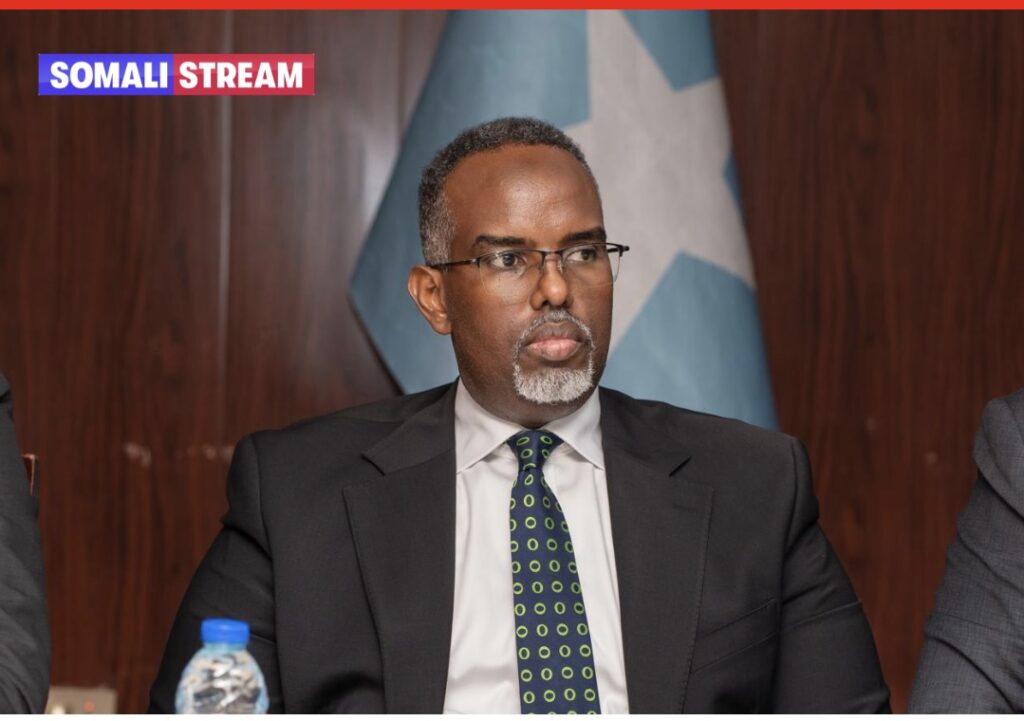
By Mohamed Dubo
Africa’s economic integration is often discussed in the language of treaties, tariff schedules and infrastructure corridors. Yet in practice, some of the continent’s most effective integration has occurred without formal frameworks—driven instead by entrepreneurs who rely on something more elemental: trust.
Somali entrepreneurs operating across Africa provide a compelling case study. From East and Central Africa to Southern markets, they have built resilient commercial networks that function across borders, currencies and regulatory systems. These networks did not emerge by design. They are the product of necessity, shaped by decades of operating in environments where formal institutions were limited and commercial survival depended on credibility, speed and reputation.
Trust, in this context, is not a social virtue but an economic instrument. It reduces transaction costs, accelerates capital mobilisation and allows commerce to continue when formal systems falter. Long before the African Continental Free Trade Area (AfCFTA) came into force, Somali business networks were already creating a de facto single market—moving goods, capital and services across African borders with remarkable efficiency.
This tradition has deep historical roots. As early as the mid-20th century, Somali transport operators were crisscrossing East and Central Africa with ageing, often improvised trucks—some dating back decades—linking ports to remote interiors. These operators connected villages to markets, enabled the movement of agricultural produce and consumer goods, and helped transform once-isolated settlements into flourishing towns and commercial centres. Long before logistics became a development buzzword, Somali transporters were demonstrating how connectivity creates growth.
That same commercial logic has since migrated into finance and technology.
Today, Somalia, and Mogadishu in particular, is emerging as a centre of fintech-driven financial innovation. A growing ecosystem of digital payment platforms, mobile wallets and cross-border financial services is positioning the city as an increasingly relevant financial hub for the Horn of Africa and beyond. These platforms are not merely serving domestic demand; they are facilitating regional trade, remittances and business financing at speed and scale.
In a continent where capital fragmentation remains a structural constraint, the rise of trusted financial hubs matters. Africa does not only need more capital; it needs places where capital can concentrate, circulate efficiently and remain resilient in the face of shocks. Trust-based financial ecosystems, built on credibility, transparency and proven commercial discipline, are harder to destabilise than purely speculative markets. Mogadishu’s fintech-led evolution offers an instructive model in this regard.
This momentum is also evident in the formal financial sector. The expansion of Premier Bank into Kenya reflects the growing sophistication and regional ambition of Somali-owned institutions. By serving cross-border traders, small and medium-sized enterprises and diaspora-linked businesses, such banks are helping to close long-standing gaps in regional financial intermediation. Meanwhile, digital platforms such as Waafi App are accelerating the digitalisation of payments and banking, reinforcing commercial linkages between African markets in real time.
Just to recall a recent conversation I had with a Somali businessman in Accra, Ghana, described to me how his business spans three African centres, seamlessly coordinated through a single digital financial platform. His financial hub is Mogadishu, where liquidity is managed and payments are cleared through trusted fintech channels. His logistics hub is Djibouti, where shipping, insurance and inventory flows are coordinated. Ghana serves as the distribution hub, supplying regional markets across West Africa.
From his phone, he can move capital, release goods and settle supplier obligations across these locations in real time—without friction, delays or excessive intermediation. The system works not because of geographic proximity, but because of trust: trust in Mogadishu’s financial ecosystem to safeguard capital, trust in Djibouti’s logistics reliability, and trust in Ghana’s market depth for distribution.
The technology merely enables what credibility has already made possible.
What is striking is not the sophistication of the software, but the simplicity of the logic. Rather than forcing all operations into one jurisdiction, the entrepreneur allocates functions to where trust, efficiency and reliability are highest. Mogadishu, once viewed only through the lens of risk, now anchors the financial heart of a pan-African enterprise.
These developments underline a broader point: African integration has often advanced fastest where practice precedes policy. Somali entrepreneurs did not wait for harmonized regulations to trade across borders, nor for continent-wide payment systems to move capital. They built working solutions first, and systems followed later.
This “policy-follows-practice” approach holds important lessons for African governments. Too often, economic potential is delayed by attempts to design perfect frameworks before allowing markets to function. Africa’s full economic promise will be realised not by replicating external models wholesale, but by recognising what already works on the ground—and scaling it responsibly.
Somalia itself is undergoing a significant transition. Regulatory reforms, improving institutions and renewed engagement with international partners are reshaping its investment climate. For African entrepreneurs, this presents an opportunity that extends beyond financial returns.
Somalia offers a unique learning environment. Its business community has spent decades refining models of risk management, cross-border finance and partnership-building under extreme constraints. These are precisely the capabilities required to operate across fragmented African markets. Establishing a commercial base in Somalia—whether in finance, trade, logistics, manufacturing or services—offers African entrepreneurs access not only to an emerging market, but to a business culture where trust, resilience and speed are core competitive advantages.
At SOMINVEST, we see Somalia not only as an investment destination, but as a continental business laboratory—one in which African entrepreneurs can learn, adapt and replicate trust-based models across the continent. The objective is not to romanticise informality, but to combine proven practices with improving governance, modern regulation and transparent dispute resolution.
Africa’s next phase of integration will not be achieved by policy alone. It will be driven by entrepreneurs willing to operate across borders, build relationships and invest for the long term. Somalia’s experience shows how this can be done.
I truly urge African entrepreneurs should look to Somalia—not only to invest, but to learn. The trust-based business values refined there can be formalised, scaled and replicated across the continent, strengthening African economies from the inside out.
In an era where Africa seeks to trade more with itself, Somalia’s most valuable export may not be a commodity, but a business culture—one built on trust, tested by adversity, and ready to serve the continent’s future.
Mohamed Dubo is the Director of SOMINVEST, with extensive experience in Strategic Communications, Investment Promotion & Diplomacy.