


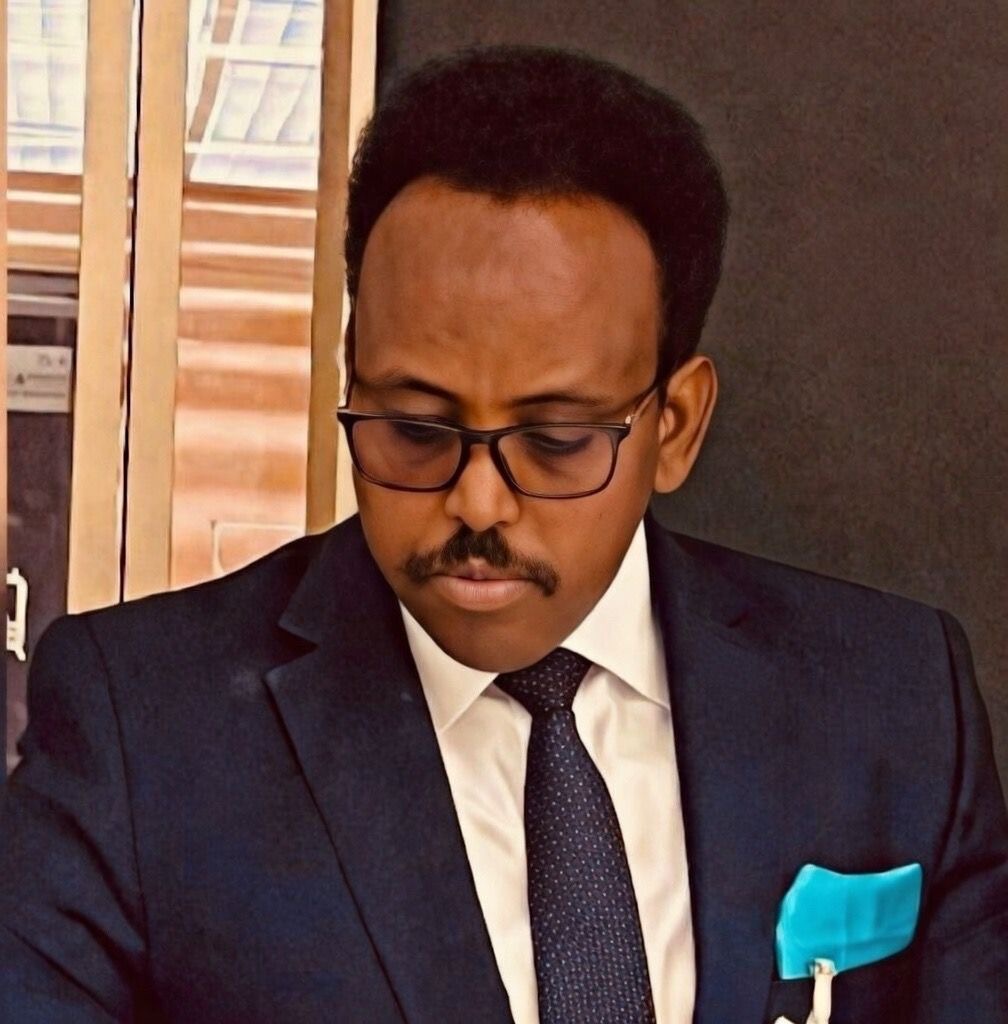
By Dr. Adam Aw Hirsi, PhD.
To Somali political leaders, traditional elders, economic elite, public intellectuals, analysts, commentators and professional journalists.
As Somalia enters yet another year of profound uncertainty—marked by looming famine (already devastating in some regions), an unpredictable and deeply contested electoral process, widening constitutional fractures, a resurgent Al-Shabaab threat, and increasingly overt external interference—one fundamental question confronts every discerning observer:
Which Somalia do you truly see—the one ravaged by endless peril, or the one varnished by private gain?
This matters profoundly, because the Somalia you behold will shape every decision you make. And those decisions, taken together, will determine the nation’s trajectory for months, years, and decades to come.
Do you see the Somalia threatened by Al-Shabaab—a group that, despite years of interventions by friendly foreign forces, the Somali National Army, and subnational security units, continues to resist, hold large territories, reclaim ground in central and southern regions, stage complex attacks near Mogadishu, attempt high-profile assassinations (including against the president), and thrive in the security vacuums created by political infighting?
Or do you see the Somalia so secure that senior politicians move through life shielded by impenetrable personal security details, reside in state-of-the-art protected mini-palaces and hotels within Halane’s Green Zone, rarely exposed to the dangers their own policies impose on ordinary citizens, and treat the insurgent threat more as a useful bargaining chip than a national emergency?
Do you see the Somalia where elevated titles require nothing more than a handful of clansmen and semiliterate political grifters cheering you on, backed by a foreign power providing financial support—mostly for its own nefarious geopolitical, resource, or regional interests?
Or do you see the Somalia that has turned anyone with distant roots in it (even those born as citizens and who have abided by the laws of their country of citizenship to a fault) into convenient boogeymen and racial scapegoats for some of the most vile, disgusting and morally bankrupt financial and political elite the world has produced for a long time?
Do you see the Somalia devastated by escalating climate stress—where consecutive failed rainy seasons have dried up wells and rivers, killed millions of livestock, destroyed livelihoods, displaced entire communities, and pushed acute food insecurity to levels that threaten whole generations in one season—only to be followed by floods that devastate crops, claim lives, and destroy critical infrastructure (such as bridges over the Jubba River) in the next?
Or do you see the Somalia so environmentally intact that nominal domestic budget allocations for adaptation are casually squandered, international disaster alerts are quietly welcomed as sort of incoming revenue, and climate grants—intended to address the unfolding crisis—are skillfully diverted to patronage, personal networks, and “more pressing national priorities”?
Do you see the Somalia of a deeply polarized people —divided along clan and institutional lines, with growing estrangement between member states and the federal government, rifts so severe that key states have, from time to time, suspended cooperation over electoral models, resource sharing, and constitutional changes they view as entrenching executive dominance?
Or do you see the Somalia so vast and resourceful that every psychological “major clan” can claim its own territory, flag, president, and security forces—carving out de facto fiefdoms under the banner of federalism—while endlessly maneuvering for dominance of the national stage, turning power-sharing into a perpetual zero-sum contest among mini-sovereignties?
Do you see Somalia bleeding its youth—where despair and frustration drive thousands into dangerous migration routes, sustain a brain drain that conceal deeper failures, or, in the bleakest cases, push young people into Al-Shabaab’s file and ranks in search of purpose, income, and belonging amid youth unemployment rates often estimated at 60–70 percent and a near-total absence of viable opportunities?
Or do you see Somalia as so educationally advanced that it boasts far more universities than vocational training centers—producing degrees poorly aligned with real jobs—while “vain prestige” remains cheaply available, with many purchasing achievement awards and diplomas each year at bargain prices to burnish fragile reputations without substance or basic competence?
Do you see the Somalia where national unity hangs by the thinnest thread—threatened in ways not seen since the worst years of civil war, with disputes over electoral systems, fiscal federalism, and presidential authority proving more divisive than even outright secessionist rhetoric, risking fresh violence or fragmentation as the 2026 elections approach?
Or do you see the Somalia so stable that political attention is almost entirely consumed by term-limit debates, succession intrigues, MP selections, and other trivial electoral maneuvering—while those in the right circles enjoy lucrative opportunities to amass ill-gotten wealth through patronage, aid diversion, procurement kickbacks, shady contracts, and control of key sectors?
These are not mere rhetorical contrasts; they reflect the stark duality of Somalia in 2026.
The ravaged Somalia demands sacrifice, genuine reconciliation, serious investment in youth, unified action against insurgency, real climate crisis response, and compromise on federalism to rebuild trust and cohesion.
The glossed Somalia preserves personal enrichment, clan entrenchment, elite insulation, and short-term political spectacle—at the steep cost of the country and its people’s long-term survival.
So, the urgent question to the leaders and thinkers who shape public discourse and national decisions remains:
Which Somalia do you truly behold?
The one defined by existential threats, despair, and division? Or the one built on insulated privilege and hollow symbols of progress?
Your answer will determine whether you work to bridge divides, preserve unity even at personal cost, prioritize substance over purchased honors, confront climate-collapse-induced famine head-on to save the land and its people, and face Al-Shabaab with resolve—or whether you remain the vain actors of the last forty years, perpetuating the cycles of absurdity that keep Somalia and Somalis fragile, demeaned, ridiculed, and perpetually existentially threatened.
Collectively, these choices will decide what Somalia becomes in the very near future: a resilient, united, and respectable republic—bruised but steadily rising toward stability and strength—or a fragmented landscape once again vulnerable to mass casualties, mass migration, collapse, and exploitation.
See clearly. Act wisely. And choose with the gravity the moment demands.
Dr. Adam Aw Hirsi (@AwHirsiSO on X) is a global geopolitical analyst and the Director of Foresight for Practical Solutions.