


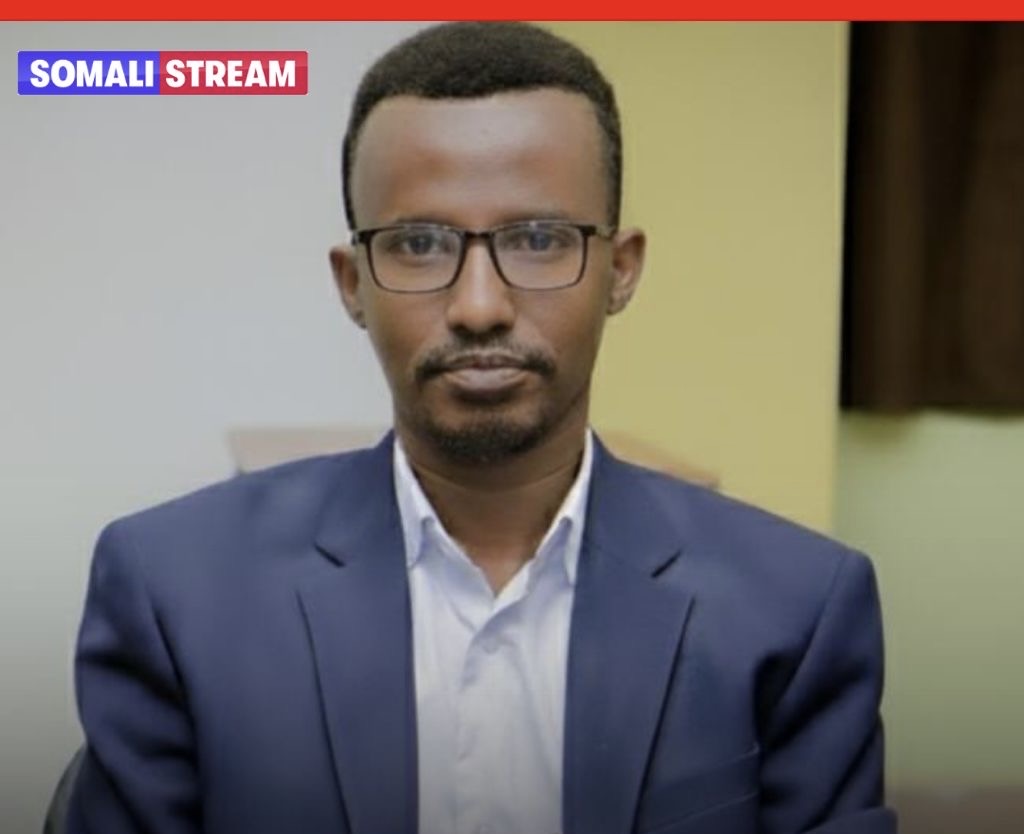
By Amin Jamal
Clan politics has always been a pervasive force throughout Somalia’s history. The complex interplay of clan loyalties and rivalries has driven the Somali nation through periods of fragile democracy, harsh dictatorship, civil war and the ongoing, messy process of federalization. While the clan system is often blamed for instability and political gridlock, a closer analysis reveals a paradox: the very fragmentation in clan politics acts as a structural, albeit weak, defense against the emergence of a singular, unchallenged dictatorship. The challenge facing Somalia today is whether its fragile federal institutions can survive the concerted attempts at power centralization without plunging the country back into chaos.
1. Historical Roots of Conflict and Centralization
Clan politics had existed throughout Somalia’s history. After independence, the governance system was structured along clan lines, a period characterized by the domination and usurpation of rights by certain clans. After the 1967 elections, the country descended into clan rivalries between the Major Clans. As General Mohamed Ghalib wrote in his book The Cost of Dictatorship, the 1969 parliamentary elections were mired in rigging and corruption perpetrated by the SYL Party, whose aim was to dominate the national assembly through taking every seat in every constituency. After the elections, conflicts erupted in most southern regions where rigging had been widespread.
The clan system in Somalia is complex, a factor that may exacerbate political instability if not handled carefully. This complexity, alongside the chaos and corruption surrounding the 1969 elections, provided a pretext for military intervention. It was in this turbulent environment that General Mohamed Siad Barre, having replaced General Daud Abdulle Hersi as Commander of the Armed Forces after the latter’s death, capitalized on the situation by overthrowing the democratically elected governmentin a coup d’état.
2. Dictatorship and the Rise of Clan-Based Opposition
Despite its anomalies, clan politics had historically paved the way for consensus regarding power-sharing among Somali clans. After the coup, the country fell into the hands of individuals who began to dismantle clan norms, although they used the “clan card” to divide potential opposition. Prior to the coup, people enjoyed freedoms provided by the constitution. The military turned the country into an open-air prison; freedoms were barred, information flow was curbed, and disinformation was disseminated. The military used every means at its disposal to degrade and destroy everyone suspected of opposing their grip on power.
Somalis, connected by clan lineages, started to establish opposition movements based on clans. The SNM, USC, SSDF and many others began to mobilize and confront the military with arms, finally succeeding in removing the regime in January 1991. The grudges sown by the regime between Somali clans began to emerge through clan and sub-clan wars, which devastated the whole country. Somali clans fought bitterly, and hundreds of thousands died in these battles
3. Federalism and the 4.5 System
From 1991 to 2000, several attempts aimed at bringing the warring sides to agree on building a government failed. In 2000, a reconciliation conference held in Djibouti made it possible for Somalis to agree on a governance system based on clans, where four major clans (Hawiye, Darood, Dir, and Digil iyo Mirifle) received an equal share in government positions, and the remaining clans were provided with half the share of each of the major clans.
Many Somali intellectuals believe that the “4.5 system” is not ideal, but it is a temporary solution that will lead to an agreed permanent solution aimed at ending the roots of political conflicts resulting from inequality and power abuse tendencies.
In 2004, a federal system was endorsed and agreed upon by a select few in a reconciliation conference held in Kenya. A Transitional Federal Government was established, led by the late President Abdullahi Yusuf Ahmed. Fast forward to 2012, the government officially exited the transition phase and became permanent. The new government, led by Hassan Sheikh, began to establish Federal Member States considering clan arrangements, and five such states were formed. The relationship between the FGS and FMS was not perfect; it was rather cordial and sometimes confrontational but neither side was trying to destroy the other.
4. Erosion of Federalism and the Current Political Instability
In 2017, Mohamed Abdullahi Farmajo was elected president. The new government started to degrade the federal system by installing allies in the Southwest, Galmudug, and Hirshabelle States. These actions of exporting allies to the states aroused anger among certain clans and could have caused clashes. The government extended its mandate unilaterally, which was interpreted as an illegitimate power grab. Armed clashes occurred in Mogadishu on April 25, 2021. The fear of civil war surfaced, but fortunately, the tension was eased, and the government was forced to relinquish the extension.
Upon electing Hassan Sheikh Mohamud for his second term, he began to mobilize resources and military forces to try to uproot and degrade AS, but within months, these efforts were prematurely abandoned. Instead, the president began to unilaterally change the agreed upon provisional constitution to suit his desire to return to power or to extend his current mandate for an unknown period. There is also a risk of conflict as the Federal Government evicts thousands of families from their homes, reportedly because the president claims the land is needed by the government, despite rumors of it being sold to private businessmen. The current administration also defied the constitutional term limit and sanctity of governance mandate by allowing the Galmudug, South West and Hirshabelle FMS presidents to stay in power despite the expiration of their mandate.
5. The Fragile Defense Against Autocracy
The agreed upon federal system, which is clan-based power-sharing, despite its flaws, has allowed the grudge-ridden, battle-weary Somali clans to live in a fragile harmony. Somalis have a negative sensitivity towards autocracy. Many Somali intellectuals, including prominent politicians, believe that clan politics in Somalia, by its very nature of fragmenting power across numerous groups, acts as a weak but persistent defense against authoritarianism.
This constant interplay of clan interests makes it difficult for any single individual or faction to consolidate absolute power without broad consensus. Therefore, the existing federal system, despite its current shortcomings and the underlying clan dynamics, is widely seen as a far superior alternative to a centralized dictatorship.
The current administration has largely missed its critical mandate to deepen the nation’s federal system, failing to adequately strengthen the Federal Member States to execute their responsibilities.
Furthermore, the administration has neglected to establish and enhance vital federal institutions; the absence of a qualified, functioning judiciary and constitutional court remains a glaring gap in building a strong democratic federal system. Expectations that the leadership would address internal challenges have not been met, as debilitating wrangles among federal and state entities continue to serve as major bottlenecks to progress.
Significant national priorities have stalled under the current administration. Disputes over completing the constitution are still present, and the essential federal institutions required to make “one person, one vote” elections possible have not been properly set up. The government has been unable to effectively tackle persistent security issues or make meaningful strides in easing the poverty and hunger ravaging large portions of Somali communities. As its four-year term progresses, these critical tasks remain unresolved, and the risk of Somalia sliding into civil war once again will be greater if the president and his cabinet do not stop their pursuit of personal power extension or partisan election maneuvering for the sake of returning to power.
Amin Jamal is a Researcher and Consultant. Views expressed in this article are those of the author and do not necessarily reflect the position of Somali Stream.