


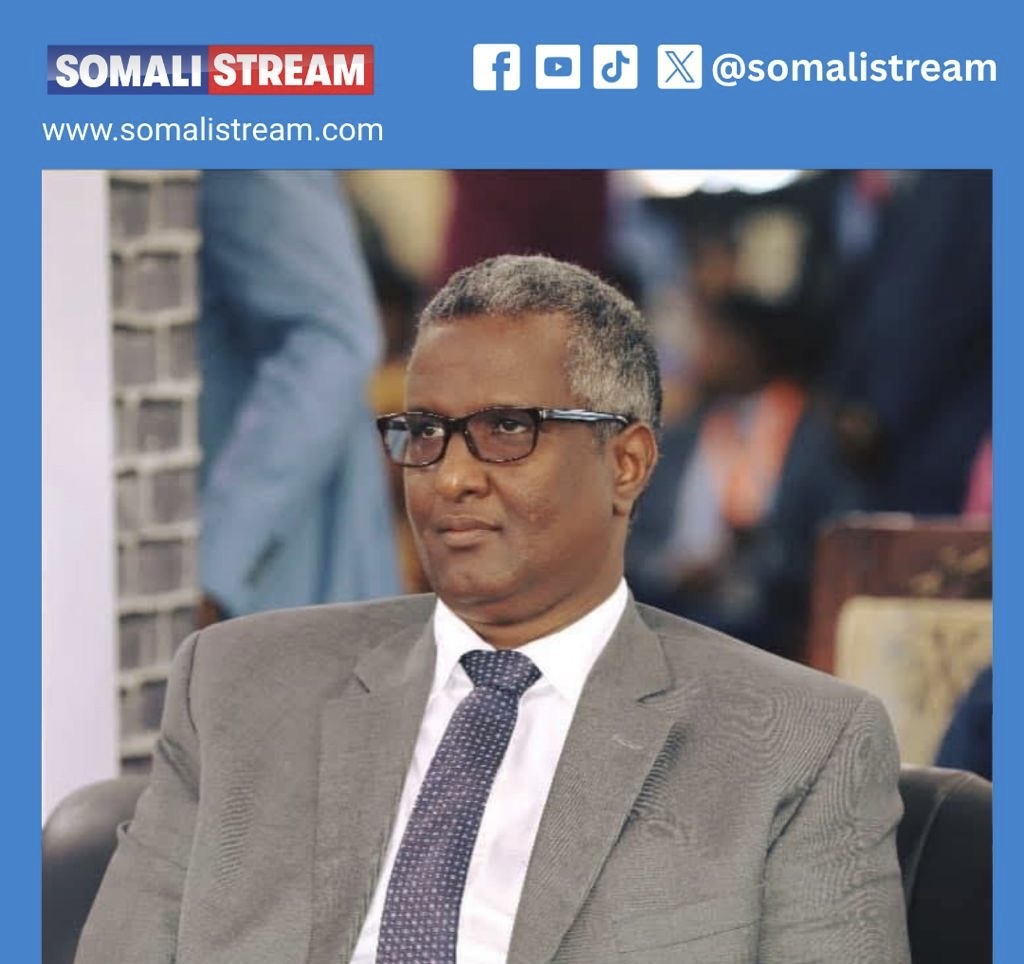
By: Abdirahman Abdishakur Warsame
Every four years, Somalia approaches a familiar crossroads. An election nears, deadlines tighten, mandates expire, tensions rise, and once again the nation waits for crisis to decide what leadership could have resolved through foresight and compromise.
Repeated crises demand reflection. Nations that fail to learn from experience risk institutional stagnation — or worse, regression. The question, therefore, is unavoidable: are we a nation unwilling to learn, or are we trapped in a structural cycle we refuse to confront? Some argue that the problem lies in institutional design — in federalism, clan-based power-sharing, parliamentary democracy, or even the holding of elections every four years. Yet repetition signals structure, and structure reveals character.
Somalia’s Provisional Constitution clearly articulates separation of powers, checks and balances, judicial independence, federal balance, accountability, and fundamental rights. On paper, it reflects serious democratic ambition. The recurring instability is therefore not the product of constitutional absence or flawed drafting. Rather, it is the consequence of constitutional indiscipline — a persistent failure to internalize the limits that democratic governance requires.
The federal structure, negotiated power-sharing, parliamentary system, and periodic elections are not accidental arrangements. They are principles of a political settlement that emerged from conflict and compromise. They form the social contract underpinning peace and state-building. To dismiss them casually is to misunderstand the foundations of Somalia’s fragile stability. Reform that sidelines key stakeholders or constitutional change pursued without broad political buy-in risks weakening legitimacy rather than strengthening it. Even well-intentioned reforms must be anchored in consensus, institutional readiness, and legal clarity. Systems do not repeatedly falter in identical ways unless those operating them fail to internalize their constraints.
The Winner-Takes-All Political Culture
The most corrosive feature of Somalia’s electoral cycle is not disagreement — disagreement is intrinsic to democracy. The danger lies instead in a winner-takes-all political culture that has taken root. Electoral victory is often interpreted as license for consolidation rather than obligation to coordinate. As mandates approach expiration without early consensus, electoral rules are contested at the final hour; dialogue is postponed until pressure becomes unbearable; international mediation reappears as a substitute for domestic political maturity. Consequently, crisis becomes the method of decision-making.
In fragile states, institutions remain in consolidation and depend heavily on the moral discipline of those entrusted to lead them. Where institutional culture is weak, personal character becomes structural. When character is weak, institutions bend; when character is strong, institutions mature. Constitutional democracy is not self-executing. Separation of powers is protection, not obstruction; checks and balances are safeguards, not hostility; accountability is responsibility, not humiliation; and federal balance is negotiated unity, not fragmentation. Yet no clause can enforce humility, and no amendment can manufacture integrity. The discipline democracy requires must be cultivated within leadership itself.
Federalism demands tolerance of shared authority; parliamentary democracy requires negotiation and compromise; power-sharing requires patience and inclusion. When politics is approached as domination rather than stewardship, no constitutional architecture can compensate for the deficit in restraint. Thus, the recurring crisis is not technical — it is behavioral.
The Leadership Challenge
Somalia therefore requires a different caliber of leadership — not merely tacticians of political survival, but stewards of constitutional order.
The country requires leaders who treat power as a means to build institutions, strengthen the rule of law, deepen accountability, and entrench democratic norms. Leadership must prioritize meritocracy over loyalty, fairness over nepotism, transparency over corruption, and consensus over unilateralism. This is not abstract idealism; it is the precondition for stability.
Such leadership must also embody discipline and competence simultaneously. It requires character strong enough to restrain ego when power tempts excess; competence sufficient to manage the complexity of local politics and geopolitical pressures; clarity to articulate national direction beyond immediate electoral cycles; conviction anchored in principle rather than expediency; confidence without arrogance; capacity to build consensus across regions and political divides; moral integrity that withstands pressure; and honesty that earns public trust through consistency. In transitional democracies, energy and technical skill without character breed manipulation, while character without competence breeds paralysis. Somalia requires both.
At the center of recurring crises lies a fundamental question: is power viewed as survival or stewardship? If power is survival, every election becomes a threat. If power is stewardship, every election becomes a responsibility. Constitutional democracy ultimately requires leaders willing to lose power constitutionally — not merely exercise it legally.
A National Responsibility
The search for such leadership cannot be left to political elites alone, nor outsourced to foreign mediators. Elites often operate under short-term survival calculations, while foreign actors pursue strategic interests. Neither can substitute for a sustained national commitment to constitutional discipline.
Somalia’s business community, religious scholars, civil society leaders, youth movements, and professional associations must therefore become active participants in shaping leadership standards. They cannot remain spectators in decisions concerning the nation’s destiny. They must demand integrity, resist unilateralism, and defend constitutional norms. Without such collective vigilance, the country risks descending into repeated instability, deepening division, and permanent uncertainty.
The Constitution provides the structure; however, character will determine whether it stands. The crossroads will return, as it always does. The decisive question is whether Somalia will continue to meet it with brinkmanship — or finally with political maturity.
The cost of not learning is not merely another electoral dispute. It is the erosion of trust in the very idea of constitutional governance.
Abdirahman Abdishakur Warsame is a member of the Somali Federal Parliament, an opposition leader, the chairman of the Wadajir Party, and a presidential candidate in the forthcoming elections of 2026.