


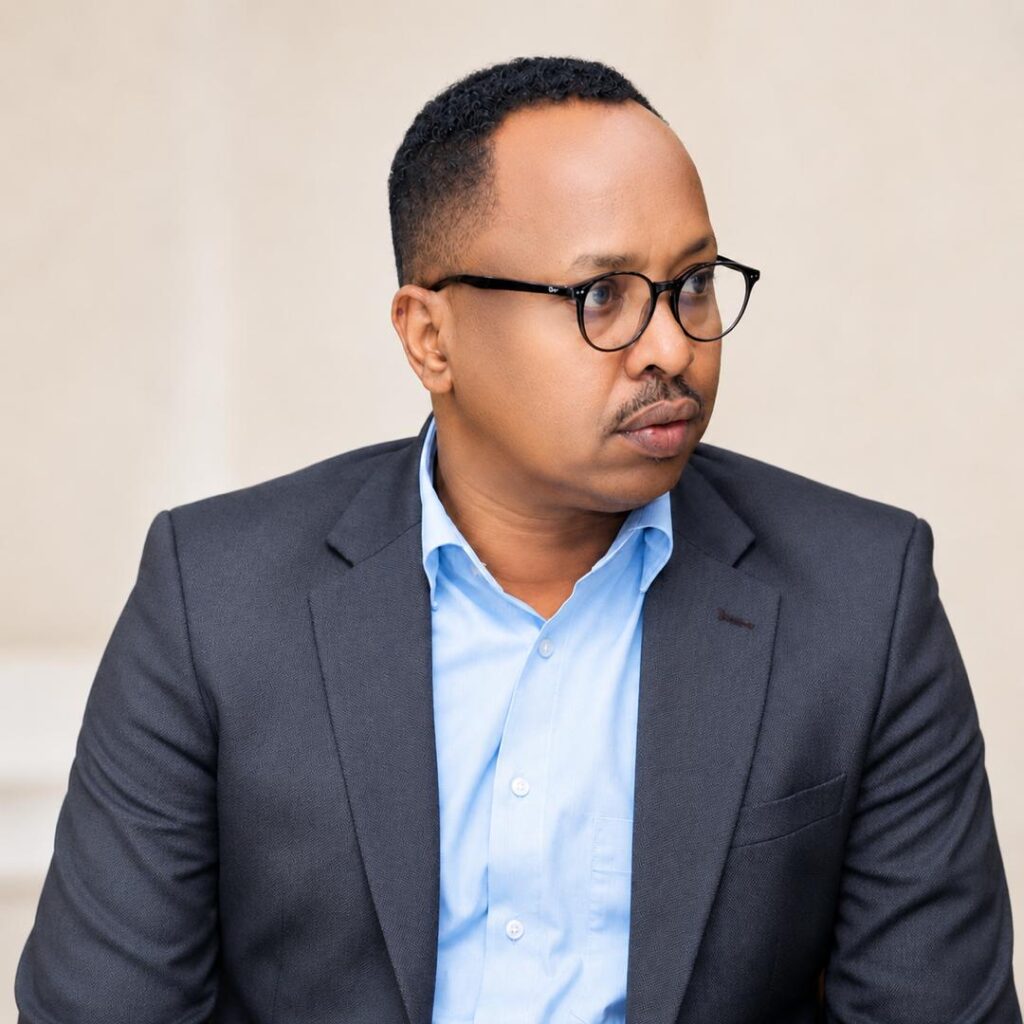
By: Abdi Gashan Egal
Somalia finds itself in one of the most consequential phases of its post-conflict era of state-building process. More than three decades since the collapse of the Somali state, the country has noticeably achieved relative progress in rebuilding public institutions, restoring international partnerships, strengthening national security capabilities as well as advancing federal governance. These gains, however, are increasingly challenged and compounded by the simultaneous convergence of political, constitutional, security, and geopolitical transitions.
Somalia’s current political environment is characterized by growing contestation over constitutional and electoral governance, reflecting broader disagreements over the country’s political transition and institutional legitimacy. The mandates of key federal institutions have become the subject of competing legal and political interpretations. While the constitutional mandates of the Federal Parliament and the President are legally distinct, the implications of the constitutional amendments adopted in March 2026 remain contested among political stakeholders, constitutional experts, Federal Member States, and opposition coalitions. Divergent interpretations of these amendments have contributed to broader disagreements concerning the legal basis for the continuation of executive and legislative authority, as well as the future direction of Somalia’s constitutional order.
At the same time, although the constitutional review process has formally concluded with the adoption of constitutional amendments, the process remains highly contested due to the absence of broad political consensus. Questions have been raised regarding the inclusiveness of the review process, the extent of consultation with Federal Member States and other relevant stakeholders, and the degree of political agreement underpinning the adopted amendments. Parallel disagreements have also emerged over the electoral framework and the composition and impartiality of the Federal Electoral Commission, further straining relations between the Federal Government and several Federal Member States. Consequently, the central debate has shifted from whether constitutional reform has been completed to whether the process has generated sufficient constitutional legitimacy, political consensus, and institutional confidence to provide a durable foundation for Somalia’s alluded-to democratic transition.
At the same time, successive diplomatic facilitation efforts undertaken by the United States, the United Kingdom, the European Union, and the United Nations have thus far not produced a comprehensive political settlement among Somalia’s principal political stakeholders. Building upon these earlier initiatives, Türkiye has assumed a leading facilitation role in convening and supporting direct dialogue between the Federal Government and opposition representatives aimed at narrowing differences over constitutional and electoral issues.
While these efforts have contributed to sustaining political engagement, they have yet to produce a mutually accepted political settlement.
These domestic political challenges coincide with a critical phase in Somalia’s security transition. Since the establishment of the African Union Support and Stabilization Mission in Somalia (AUSSOM), questions regarding the mission’s long-term financing and sustainability have assumed increasing strategic importance amid evolving geopolitical priorities and changing international approaches to peace support operations. Against this backdrop, the Kampala Ministerial Meeting of Troop Contributing Countries reaffirmed that a sustainable security transition cannot be achieved through military operations alone. Rather, it requires inclusive political dialogue, strengthened national ownership, predictable and sustainable financing, and enhanced cooperation among the Federal Government, Federal Member States, the African Union, and international partners
Strategic Analysis
The principal challenge confronting Somalia is not the existence of individual political disputes but the convergence of multiple transitions unfolding simultaneously. Constitutional reform, electoral transformation, security transition, and evolving international engagement have become increasingly interconnected, such that developments in one domain directly influence outcomes in the others.
Current political disagreements extend beyond electoral procedures to encompass broader questions concerning constitutional governance, institutional credibility, and the future trajectory of Somalia’s federal political order. The absence of broad political consensus has complicated relations between the Federal Government and several Federal Member States, intensified disagreements over constitutional interpretation and electoral arrangements, and reduced confidence among key political stakeholders in the processes intended to guide the country’s political transition.
These political dynamics have implications that extend beyond constitutional and electoral governance. If left unresolved, they could weaken Somalia’s security transition by constraining intergovernmental cooperation, limiting coordinated decision-making, and complicating the implementation of nationally owned security arrangements. As responsibility for national security is progressively transferred from international partners to Somali institutions, the success of this transition will depend not only on the operational effectiveness of the Somali Security Forces but also on the extent to which the political and constitutional framework commands broad confidence and cooperation among the country’s principal stakeholders. Security gains achieved through military operations are unlikely to prove durable if political divisions continue to impede coordinated governance and stabilization efforts.
The strategic environment is further complicated by changing international priorities. Competing global crises, increasing fiscal pressures, and shifting geopolitical interests have reduced the prospect of open-ended international political, financial, and security support. Consequently, Somalia faces a narrowing strategic window within which to consolidate constitutional governance, strengthen nationally owned institutions, and advance a broadly supported political settlement before external assistance becomes increasingly constrained.
Taken together, these developments suggest that Somalia’s current challenges extend beyond electoral administration or constitutional interpretation alone. They raise a broader question of whether the country’s political institutions and constitutional processes can generate sufficient confidence, acceptance, and cooperation to sustain effective governance, preserve federal cohesion, and facilitate a peaceful political transition. Prolonged political deadlock therefore carries implications that extend beyond governance, with potential consequences for national stability, security transition, and the wider stability of the Horn of Africa.
Comparative Perspective
Comparative experience demonstrates that periods of political transition become particularly vulnerable when constitutional reform, electoral competition, and security transformation occur simultaneously without broad political consensus. While no international case mirrors Somalia’s unique historical and political context, the experiences of Afghanistan, Rwanda, and Kenya offer relevant lessons regarding the relationship between political consensus, institutional resilience, and long-term stability
Taken together, these comparative experiences demonstrate that sustainable political transitions cannot be secured through elections, constitutional amendments, or security operations in isolation. Rather, durable stability emerges from inclusive political dialogue, broadly accepted constitutional arrangements, effective and accountable institutions, nationally owned reform processes, and public confidence in the state’s ability to exercise legitimate authority. For Somalia, these lessons underscore the importance of addressing current political disagreements through negotiated constitutional and political mechanisms while ensuring that security transition proceeds in parallel with efforts to strengthen institutional confidence, federal cooperation, and nationally owned governance reforms. Such an integrated approach remains essential for preserving state resilience and securing long-term peace and stability
Way Forward
To safeguard the significant gains achieved over the past three decades—including the rebuilding of state institutions, improvements in national security, constitutional and federal governance, debt relief, and Somalia’s reintegration into regional and international affairs—Somalia’s political stakeholders should prioritize measures that strengthen constitutional governance, broaden political consensus, and reinforce cooperative federal relations
The Federal Government should, convene a time-bound National Political Dialogue under a mutually agreed facilitation mechanism involving the Federal Government, Federal Member States, registered political parties, opposition leaders, and representatives of both Houses of Parliament. The dialogue should be supported by trusted international partners in a facilitative rather than decision-making role. Its mandate should be narrowly focused on achieving consensus on four priority issues:
The dialogue should conclude with a publicly endorsed implementation roadmap, supported by a joint monitoring mechanism to oversee implementation and reduce the risk of renewed political deadlock.
Federal Member States and opposition actors should commit to a structured, time-bound political engagement process aimed at resolving outstanding constitutional and electoral disagreements through peaceful and institutional means. As confidence-building measures, they should participate in an extraordinary National Consultative Council (or an alternative mutually agreed political forum), nominate technical representatives to a joint constitutional and electoral review mechanism, refrain from unilateral actions that could prejudice ongoing negotiations, and publicly commit to implementing agreed outcomes within defined timelines. In return, they should actively contribute to developing a nationally agreed roadmap for constitutional implementation, electoral governance, and federal cooperation, while reaffirming their shared commitment to preserving Somalia’s federal constitutional order and supporting the country’s security transition.
International partners should recalibrate their engagement from supporting parallel political initiatives to facilitating a single, Somali-led, time-bound political process with clearly defined objectives, milestones, and accountability mechanisms. Future political and governance assistance should prioritize implementation of agreed outcomes rather than supporting successive rounds of dialogue without measurable progress. Technical and financial support should focus on constitutional implementation, electoral preparedness, federal–state confidence-building, and institutional capacity development, while maintaining support for Somalia’s security transition. Development partners should jointly establish a results-based political compact, linking selected governance assistance and discretionary institutional support to demonstrable progress on agreed political benchmarks, including implementation of political agreements, strengthened intergovernmental cooperation, and the establishment of credible constitutional and electoral arrangements. Such an approach should preserve humanitarian assistance, life-saving services, and essential security support, while encouraging greater national accountability, political ownership, and timely implementation of agreed reforms.
Conclusion
Somalia has reached a pivotal moment in its state-building journey. The convergence of constitutional contestation, electoral uncertainty, evolving federal relations, security transition, and changing international engagement presents the most significant strategic challenge since the establishment of the federal constitutional order. While these dynamics create considerable risks, they also present an opportunity to strengthen constitutional governance through an inclusive, nationally owned political settlement.
Comparative experience demonstrates that sustainable political transitions cannot be secured through constitutional reforms, elections, or security operations in isolation. Rather, they depend on broad political consensus, effective institutions, cooperative federalism, and the coordinated implementation of nationally agreed reforms.
Ultimately, the durability of Somalia’s democratic transition will depend not only on the constitutional existence of its institutions but also on their ability to command broad political confidence, facilitate cooperative federal governance, and manage political competition through peaceful and constitutional means. Preserving the gains achieved over the past three decades—including the rebuilding of state institutions, improvements in national security, expanding federal governance, debt relief, and Somalia’s renewed international engagement—will require collective political leadership, mutual compromise, and sustained commitment to constitutional governance. An inclusive, time-bound, and nationally owned political settlement remains the most credible pathway for consolidating these achievements and securing a peaceful, stable, and resilient future for Somalia.
Abdi Gashan Egal is a senior governance and institutional development specialist with over 13 years of experience designing and leading programs in democratization, decentralization, education sector planning, community stabilization, and institutional capacity strengthening in Somalia.
