


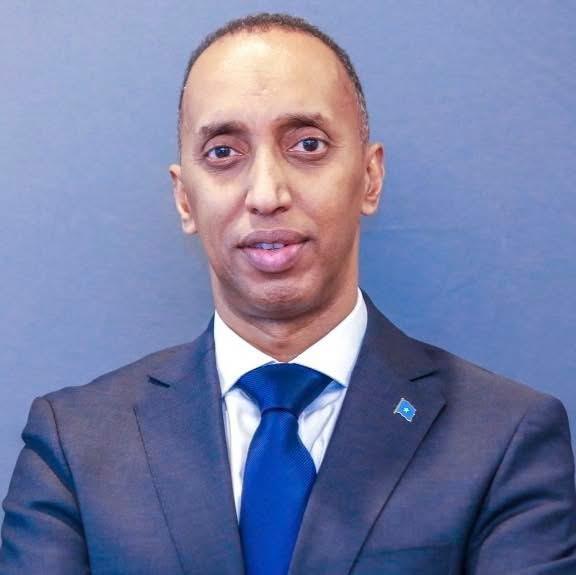
Mohamed M. Ali
Somalia is heading into a sensitive political moment. What follows is a practical way to navigate the current election gridlock and avoid deeper instability.
In Somalia, elections no longer feel like turning points. More often, they bring uncertainty, delay, and last-minute bargaining that leaves the system strained and the public unconvinced.
Now the country is approaching another deadline. Parliament’s term ends in mid-April 2026. The President’s follows in mid-May. On paper, this should be a routine transition. In reality, it is anything but.
What makes this moment different is not just political disagreement. That has always existed. The deeper issue is simpler, and more serious: there is still no clear, agreed roadmap for how these elections will take place.
That absence has been building for some time.
In systems like Somalia’s, breakdowns rarely happen all at once. They creep in. Discussions are postponed. Key decisions are left hanging. There is always the sense that there is still time, until suddenly there isn’t. What should have been settled early becomes rushed. What should have been agreed becomes contested.
That is where things stand today.
For years, there was space to build consensus between the Federal Government and Federal Member States. There was time to agree on the rules, to negotiate trade-offs, and to prepare the country for a unified transition. That opportunity was not used.
Instead, Somalia is now edging toward something far more risky, a dual-track election process, where different actors move in parallel, each claiming legitimacy.
In any country, that would be destabilizing. In Somalia, it could be deeply damaging.
Because once legitimacy splits, everything else follows. Institutions weaken. Security becomes harder to maintain. Businesses pull back. Confidence drops. The system begins to stretch in ways it cannot hold.
This is not speculation. It is where unresolved political processes tend to lead.
What makes this moment harder to accept is that Somalia has not been standing still. There have been real efforts to improve security. In some areas, progress has been made. But those gains have not always been sustained. Territory is cleared, but not consistently stabilized. Governance and services do not follow quickly enough.
Security without governance does not last.
The same pattern is visible in the economy. Somali businesses continue to push forward, often carrying more weight than they should. The country has real advantages, where it sits, the energy of its people, and how young the nation is.
But resilience alone is not transformation.
Without clear policy direction, better structure, and the kind of confidence that attracts investment, that potential can only go so far.
Governance tells a similar story. Delays have become familiar. Disputes over mandates keep resurfacing. And term extensions, something that should be rare, are beginning to feel routine.
Because when rules bend at the top, they slowly lose their meaning everywhere else.
Seen together, the current election gridlock is not just about elections. It reflects a broader pattern, difficult decisions postponed until they become urgent.
Now, those delays have caught up.
With Parliament and the Presidency both reaching the end of their terms within weeks of each other, the country is stepping into a very tight and uncertain moment. Without a clear plan, the issue isn’t just a delay; it’s the risk of confusion, overlapping processes, and people losing trust in how things are handled.
Avoiding that outcome does not require something complex. But it does require discipline. When these terms expire, they should end. Parliament, the President, the Prime Minister, and the Cabinet should step aside. This should not be controversial. It is how constitutional systems are meant to function.
Allowing mandates to continue beyond their expiry may feel convenient in the moment, but over time it weakens the system itself.
In their place, there should be a caretaker arrangement, politically agreed, clearly limited, and bound by time.
Twelve months is enough.
Its mandate should be simple and focused, to take the country through a credible Presidential election within a defined timeline that cannot be extended.
Nothing more.
It should not attempt to govern broadly. It should not take on major policy decisions. Its legitimacy depends on restraint.
To protect that process, those running the caretaker government should not be candidates in the election themselves.
But structure alone will not build trust. There must also be accountability.
A well-respected oversight committee, composed of figures agreed by all key stakeholders, the Federal Government, Federal Member States, opposition, and civil society, should be put in place to monitor the process. Its role should be clear, to ensure the caretaker stays within its mandate and that timelines are respected.
Alongside this, Federal Member States can move forward in appointing representatives to form the next parliament through an agreed process. Their mandate would formally begin once a new president is elected.
None of these steps are perfect. But they are workable. And at this stage, workable matters more than ideal. What Somalia cannot afford is to enter this election period without agreement and hope that things will resolve themselves.
They will not.
At some point, that cycle has to stop.
Somalia does not lack capable people. It does not lack ideas. What has been missing is timely agreement and the discipline to follow through. This is one of those moments.
The choice is simple. A managed transition, or a messy one. One process, or competing ones. Clarity, or confusion. Time is short. And this time, there is very little room to get it wrong.
Mohamed M. Ali (Afgoi) is a Governance and Policy Expert and Former Auditor General of Somalia.