


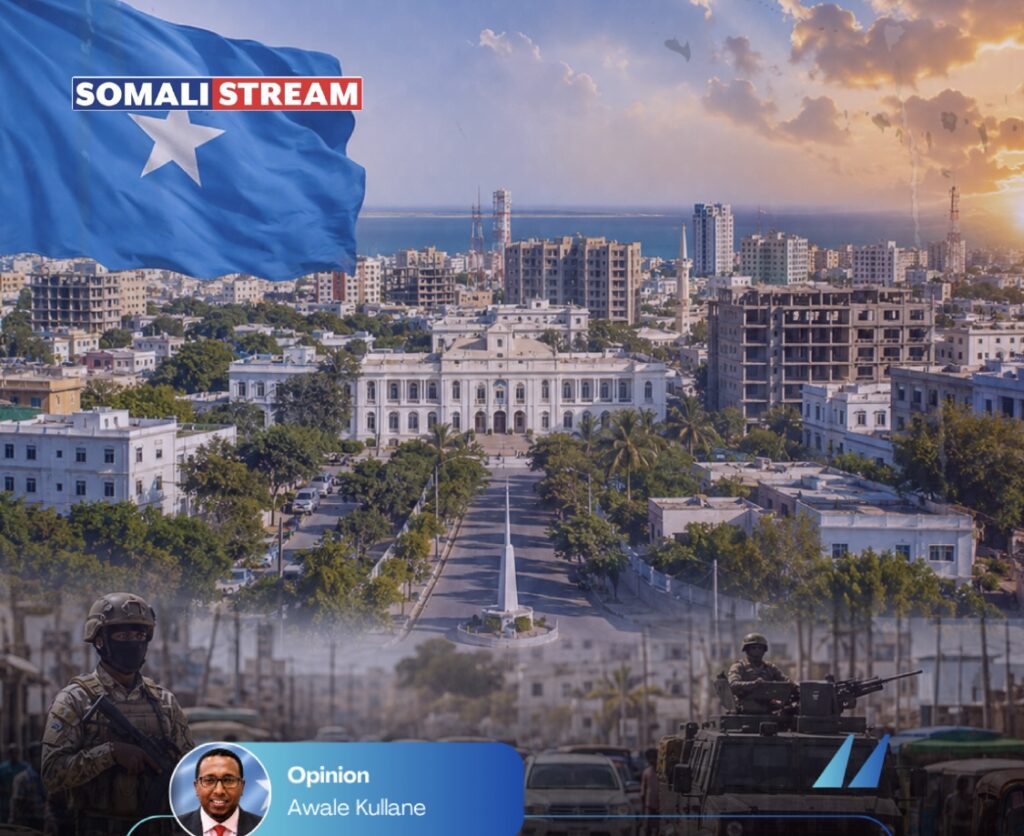
Between 1 and 7 June 2026, Mogadishu witnessed armed confrontation in the capital, emergency mediation by clan elders, a brief paralysis of government business, and an unusual concentration of diplomatic statements from international partners. The events themselves were significant. Their lasting significance lies elsewhere.
For more than a decade, Somalia has survived its political crises through a process that might be called institutional substitution. When the political track stalled, federal-member-state pressure absorbed part of the load. When parliamentary process deadlocked, clan elders mediated. When domestic actors could not find a settlement, international partners created the diplomatic space in which one became possible. No single institution was strong on its own. The system held because each could temporarily carry the weight of another.
The arrangement was imperfect, but it endured because at each moment of stress there remained at least one institution capable of compensating for the others.
What the past week revealed is not the failure of any single institution. It is the growing strain on the mechanism through which those institutions have historically compensated for one another.
The political pillar cannot easily substitute for itself. The constitutional dispute over the term extension, over the electoral roadmap, and over the relationship between the federal government and the federal member states is the precise dispute that has triggered the wider crisis. An instrument that has become the source of the disagreement cannot easily be the instrument that resolves it. The architecture is being asked to repair a fracture in its own foundation.
The security pillar is no longer in a position to absorb pressure from the political pillar in the way it once did.
It has been drawn into the dispute. When armed confrontation enters the capital, when security operations become the central instrument of crisis management, and when the institution responsible for the monopoly of force becomes the institution through which a legitimacy crisis is being prosecuted, the security pillar is no longer carrying the crisis. It is becoming part of it.
The mediation and international pillars performed real work this week, but in a register that revealed the same condition by another route. The fighting on 3 and 4 June was stopped through informal channels: clan elders, intelligence-led negotiations, and the quiet intercession of figures with standing across the political divide.
This may have prevented something worse. But a confrontation between the executive and the parliamentary opposition was de-escalated outside the constitutional architecture rather than through it. Informal mediation can pause a crisis. By itself, it cannot resolve one. The international partners are still present, but their language has shifted. Statements that once addressed a government and an opposition now address all sides, all parties, and all stakeholders. This is not a withdrawal of engagement. It is a change in posture from active brokerage to careful observation.
States rarely collapse because one institution fails. They become vulnerable when the institutions that normally compensate for one another begin failing together. And they recover when those institutions are restored to a condition in which they can once again support one another rather than absorb one another’s strain.
The current actors are temporary. Every president, every prime minister, every army chief, every intelligence director will, in time, leave the stage. The institutions that must govern Somalia after them are not temporary. The strategic question is therefore not who prevails in the current contest. It is what remains standing when the contest ends.
A political crisis becomes dangerous not when it divides leaders, but when it begins to divide the institutions responsible for managing disagreement between them. That is the configuration the events of 1 to 7 June revealed, and the response that configuration calls for is not partisan.
The challenge facing Somalia is not simply to end the present confrontation. It is to restore enough confidence in political, security, and mediation institutions that they can once again support one another rather than compensate for one another.
A system can survive temporary strain. What it cannot survive indefinitely is the loss of the mechanisms through which strain is absorbed.
The events of 1 to 7 June may ultimately be remembered less for the confrontation itself than for the question they posed: whether Somalia’s institutions still possess the capacity to carry one another when the next crisis arrives.
That question matters because the institution that must survive us is the one our children will need after we are gone.
Awale Kullane is former Somali Ambassador to China and Sweden, former Deputy Permanent Representative of Somalia to the United Nations and former Chief of Staff and Permanent Secretary, Office of the Prime Minister of Somalia and candidate for the Presidency of Galmudug State, 8 June 2026.
