


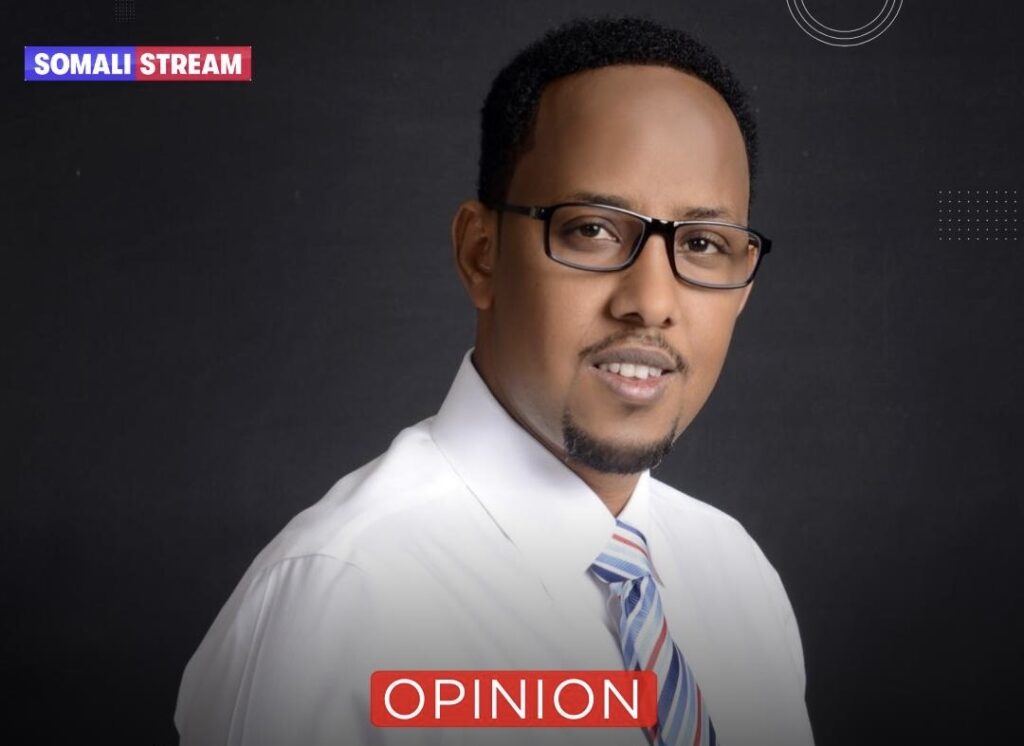
By: Abdinur Mohamed Ahmed
On 7 March 2026, leaders of the eight partner states of the East African Community (EAC) will convene at the Arusha International Conference Centre in Arusha, Tanzania for the 25th Ordinary Summit of EAC Heads of State, a gathering that will shape the next chapter of regional integration in East Africa.
The summit’s agenda is ambitious: the launch of the EAC Customs Bond to ease cross-border trade, the unveiling of the 7th EAC Development Strategy (2026/27–2030/31), deliberations on sustainable financing of the Community’s budget, and perhaps most consequentially, the appointment of senior officials including the Secretary-General and judges of the regional court.
Behind the technocratic language of institutional appointments lies a strategic reality. Leadership positions within the EAC are not merely administrative posts – they are the levers through which the region’s economic integration, political coordination, and institutional trajectory are shaped.
For Somalia, therefore, this summit represents something far greater than routine diplomacy. It is an opportunity to translate recent diplomatic momentum into meaningful regional leadership.
Somalia’s accession to the East African Community was neither accidental nor sudden. It was the culmination of more than a decade of diplomatic engagement, negotiations, and regional outreach.
After a sustained push spearheaded by the administration of Hassan Sheikh Mohamud, the Somalia officially became a full member of the EAC on 4 March 2024, following the decision of EAC Heads of State in November 2023 to admit the country as the Community’s eighth partner state.
In parallel with these institutional developments, Somalia is also advancing practical steps toward deeper regional integration. The country is set to begin issuing the East African Community passport, joining other member states in adopting the regional travel document designed to facilitate mobility across the bloc. The country was formally handed over the approved EAC passport design features during a ceremony in Tanzania attended by Somalia’s Interior Minister Abdullahi Sheikh Ismail Fartaag and the Director General of the Immigration and Citizenship Agency, Mustafa Sheikh Ahmed Dhuhulow.
Somalia had received official authorization to print the EAC passport in December 2025, and the rollout of the document marks an important diplomatic and administrative milestone—one expected to strengthen regional integration and facilitate the freer movement of Somali citizens across East Africa.
President Hassan Sheikh Mohamud deserves recognition for the political capital and diplomatic effort invested in securing Somalia’s entry into the bloc. For a country that spent decades navigating conflict and institutional fragility, joining East Africa’s most consequential regional organization represented a powerful signal of Somalia’s return to regional diplomacy.
The accession was widely celebrated as a historic milestone. Membership promised expanded trade opportunities, access to regional infrastructure initiatives, and deeper political and economic integration with neighbors such as Kenya, Uganda, Tanzania, Rwanda, Burundi, South Sudan and the Democratic Republic of the Congo.
But accession, while historic, was only the beginning. The real test lies in how effectively Somalia converts membership into influence.
Somalia’s regional ambitions coincide with a period of renewed diplomatic visibility on the global stage.
In February 2026, Somalia secured election to the African Union Peace and Security Council for the 2026–2028 term, marking the country’s first participation in the body since its creation in 2004.
The vote took place in Addis Ababa ahead of the African Union Summit, underscoring the growing confidence among African states in Somalia’s diplomatic re-engagement.
Simultaneously, Somalia is serving as a non-permanent member of the United Nations Security Council for the 2025–2026 term, having been elected by the United Nations General Assembly.
These developments collectively signal a country gradually reclaiming its diplomatic agency after years of marginalization. Yet influence at the global level must be matched with institutional presence within the region itself.
Despite the symbolism of Somalia’s entry into the EAC, the operationalization of that membership remains incomplete.
Before formally becoming a full partner state, Somalia swiftly paid its 2024 financial contribution to the Community. Yet at the time, the country did not have representatives entitled to sit in the East African Legislative Assembly (EALA), the legislative body responsible for shaping regional laws and policies.
This unusual sequence raised quiet questions within diplomatic circles. The rapid payment suggested urgency, perhaps even political symbolism – rather than a carefully sequenced institutional integration. The reasons behind this accelerated move merit deeper reflection.
Nearly a year after the Federal Parliament of Somalia ratified the country’s accession, Somalia’s participation in the bloc’s institutional framework remains incomplete.
Although elections for Somalia’s representatives to the regional parliament were conducted in October 2025, the elected lawmakers have yet to be sworn into office.
Information obtained by Somali Stream indicates that the primary obstacle lies in the Federal Government of Somalia’s failure to settle its financial contributions for 2025 and 2026 – a procedural requirement for full participation within EAC institutions. As a result, Somalia’s representatives remain unable to assume their seats in the regional legislature.
As I write this, nine duly elected lawmakers; Hussein Hassan Mohamed, Ilhaan Ali Gasar, Faysal Abdi Roble, Abdisalaam Hadliye, Abdirahman Bashir Sharif, Fahma Ahmed Nur, Fadumo Abdullahi, Abukar Mardaadi, and Sahra Ali Hassan remain unable to take their seats, leaving Somalia without representation in the East African Legislative Assembly at a moment that should have marked its first full and meaningful participation in the EAC since formally joining the bloc in 2024.
The contrast is difficult to ignore. Somalia currently participates in deliberations at the UN Security Council and the African Union Peace and Security Council, yet remains absent from the legislative chamber of its own regional bloc.
The Strategic Leadership Opportunity
Somalia’s accession to the EAC did not merely provide market access. It also unlocked institutional opportunities within the Community’s governance architecture.
Under EAC arrangements, each partner state can compete for one of the bloc’s eight most senior leadership positions including the Secretary-General, deputy secretary-general roles, the Speaker of the East African Legislative Assembly, and judges of the regional court of appeal.
These are not symbolic titles. They represent genuine political authority within the Community’s executive, legislative, and judicial arms. Holding such a position would allow Somalia to influence regional trade policy, guide institutional reforms, and shape the strategic direction of East African integration.
For a country seeking to reposition itself diplomatically and economically, this is an opportunity that cannot be approached passively.
From Presence to Influence
Somalia’s economic footprint across East Africa already speaks for itself. Somali entrepreneurs are deeply embedded in regional commerce, logistics, finance, and telecommunications – from the commercial districts of Nairobi to trading corridors extending through Kampala and beyond.
In practical terms, Somalia already exercises considerable informal influence within the region’s economic networks.
What remains is the translation of that influence into formal institutional power.
Achieving this requires deliberate strategy: settling financial obligations, activating representation within the EALA, building diplomatic coalitions among partner states, and presenting credible candidates for senior leadership positions within the EAC. This is precisely how other member states have historically secured influential posts within the Community.
Two years after formally joining the East African Community, Somalia stands at a defining juncture.
The country has already demonstrated its diplomatic capability by securing seats on the United Nations Security Council and the African Union Peace and Security Council – two of the most consequential decision-making bodies in global and continental governance.
The logical next step is to translate that diplomatic momentum into leadership within the region’s most important integration project.
If Mogadishu moves decisively, regularizing its institutional participation, activating its parliamentary representation, and strategically pursuing senior positions within the EAC – the country can transform its membership from symbolic accession into substantive influence.
But if these opportunities are neglected, a historic diplomatic victory decades in the making risks fading into little more than ceremonial participation.
The message, therefore, is clear: after the UN Security Council and the African Union Peace and Security Council, Somalia’s next diplomatic frontier should be unmistakable.
Abdinur Mohamed Ahmed is the former Deputy Chief of Staff of Somalia’s Presidency under President Mohamed Abdullahi Farmaajo and the current Non-Executive Director of Somali Stream.