


Centuries ago, in the Muqaddimah, Ibn Khaldun described the phase at which dynasties end. Writing on the causes of the collapse of states, he set it down in a single sentence:
إذا احتاج السلطان إلى المال، تهاون في أمور رعيته، وباع الأعمال، وأخذ عليها المال، فيدخل الفساد في الحكم.
“When the ruler is in need of money, he becomes negligent in the affairs of his subjects, and he sells the offices of the state, and takes money in return for them. And so corruption enters the government.”
— Ibn Khaldun, Muqaddimah, Book Three, on the decline of dynasties (c. 1377)
The kind of collapse Ibn Khaldun is describing is the one in which a state is not conquered from outside. It is sold from within. Those entrusted to protect it begin to trade it away. Once corruption enters through that door, the state may still look strong from the outside. The ceremonies remain grand. The buildings still stand. The seat at the international table is still occupied. But inside, nothing is holding. When the test comes, there is no one left to meet it.
He was not writing about Somalia. He was writing about every ruling class that had reached the same door. But if he were reading the news from Mogadishu this year, he would not need to change a sentence.
We are at a stretch of road in our national life that decides everything. It is not the smooth stretch. It is the rough one, full of stones and switchbacks, where the light is failing and the map is old. On that road we are not travelling alone. We are travelling in a bus, and every child in the country is in it. On that stretch, only one thing matters: who is holding the wheel. You do not choose that driver by who paid the most to sit in the seat. You choose him because he has driven before, in weather like this, and brought people home.
And yet we have arrived at a moment when a man who has never held a leadership position, never served in government, never run so much as a small institution, can be advanced to lead an entire federal state. Not because anyone believes he can do the work, but because he can pay for the post. The people arranging his path, those who lead the government, presidential candidates, elders, parliamentarians, ministers, party officials, brokers, no longer even pause to ask what will happen when the payment ends and the work begins.
The worst of it is not the transaction itself, but the fact that the transaction no longer shocks anyone. Corruption in Somalia has passed the stage of scandal. It has become the water the political class swims in, so ordinary that its consequences are no longer discussed. A country still learning how to stand has arrived at a moment when the men entrusted with its future can sell a school, a hospital, a ministry, the presidency of a member state, for lunch and treat it as a Tuesday.
The Arab world has lived this lesson in our own lifetime. In October 2016, after twenty-nine months without a president, the Lebanese parliament elected Michel Aoun through a package deal between rival blocs. The presidency was traded for the premiership, the ministries divided among the factions. Everyone got his portion. Three years later, in October 2019, the currency collapsed, the banks froze the people’s savings, and Lebanon began a fall from which it has not risen. The men who divided the seats had believed the outside world would forever cover their arithmetic. It did not.
Or Iraq, in June 2014. A prime minister who had spent his second term filling the army, the intelligence services, and the ministries with loyalists rather than professionals watched as Mosul, a city of nearly two million, fell to a few thousand fighters in four days. The divisions existed on paper. On the ground, they dissolved on contact, because they had been built on patronage rather than competence. When you install the least competent man at the summit, incompetence flows downward through every office beneath him, until the day the state is tested and there is no one left who knows how to hold the line.
This is the lesson our political class should hear plainly. The presidential candidate of a member state who knows he has never done the work, and plans to buy his way to a seat he cannot fill, the elder who accepts money to endorse him, the parliament that passes a bill it has not read, the official who arranges the transaction and takes his cut, none of them are selling a vote. They are selling the ground they and their own children are standing on.
The day he walks into power, their own future begins to erode with everyone else’s.
The well, the school, the road half-finished under the last administration, all of them already there, all of them waiting for someone who knows how to close a file and release a payment. The justice their people will look for and not find. The borders we share with our neighbours that will need to be managed by someone who understands what he is looking at. The federal cabinet room, where their state’s share of the future will be argued for and lost. And the drought that is not one drought but a cycle, whose arrival can be predicted and whose worst can be softened, if the man in the office knows who to call.
The envelope they have taken is not what they think it is. What they think they are eating is lunch. What they are actually spending is the future of their eldest child. When the aid contracts, when the patrons tire, when the winds that carried us this far turn, and they are already turning, the men who took the envelope will be among the first to feel it. They will knock on doors that no longer open. They will ask for support from institutions that have been hollowed by the very men they installed. And the reply will be silence, because silence is all that hollow institutions know how to give.
We did not get where we are by accident. It took nearly thirty years of work to reach this point. Somalia has come a long way from where it was. The state, thin as it is, exists again. Passports are recognised. Ministries function, some of them well. Children go to school in places where a generation ago there was no school. Neighbours who once looked at us with pity now sit across the table from our diplomats. All of that was built slowly, by Somalis who paid for it in ways that are not written down. Incompetent leadership at a founding moment does not preserve that ground. It does not even stagnate it. It gives it back, often through conflict, because the incompetent leader, unable to build, learns quickly how to cling. And clinging leaders, in fragile federations, reach for force. Another climb of that length is not something a nation gets to make twice in the same century.
So to the presidential candidate weighing his cheque, to the elder weighing the envelope, to the official arranging the deal, to the parliamentarian who has been asked to vote on what he has not read, one question only.
When the road turns rough, and the man you sold the wheel to cannot drive, whose children are on that bus?
Yours are among them.
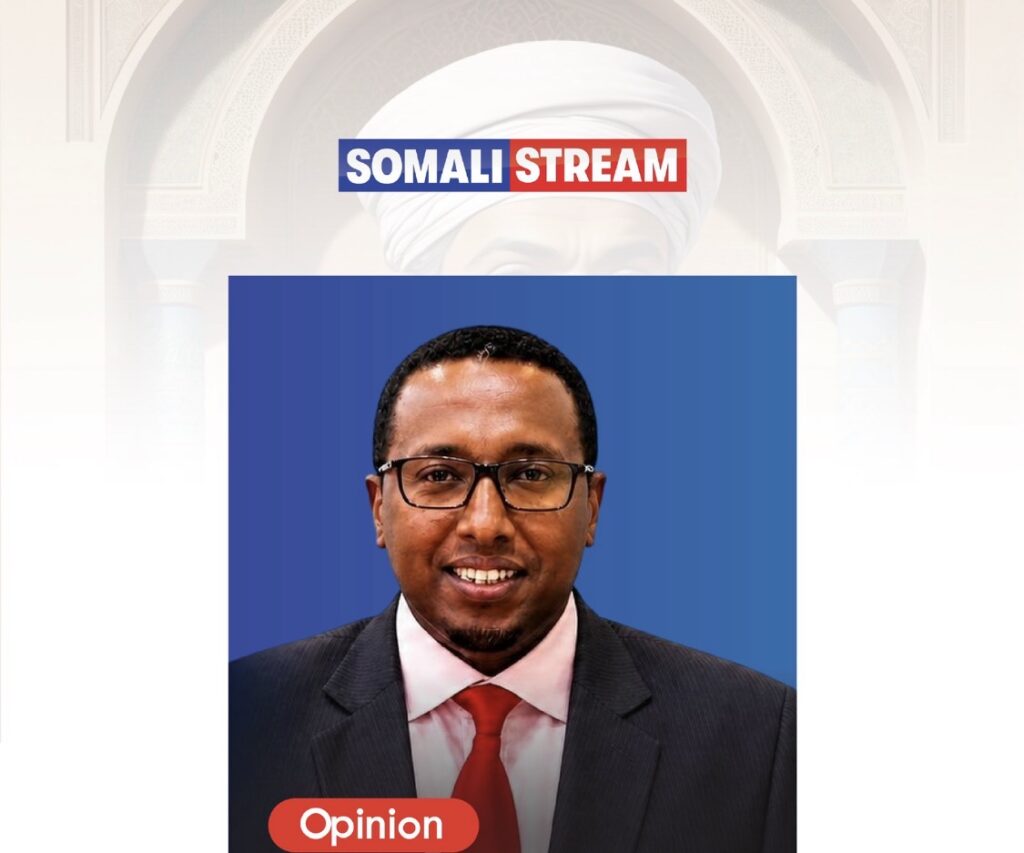
Awale Kullane is a Somali diplomat, political analyst and former ambassador. He has served in senior diplomatic roles, including as Somalia’s ambassador to China and Sweden and as deputy permanent representative to the United Nations. His writing focuses on governance, constitutional reform, regional security and Africa’s place in a changing international order.
