


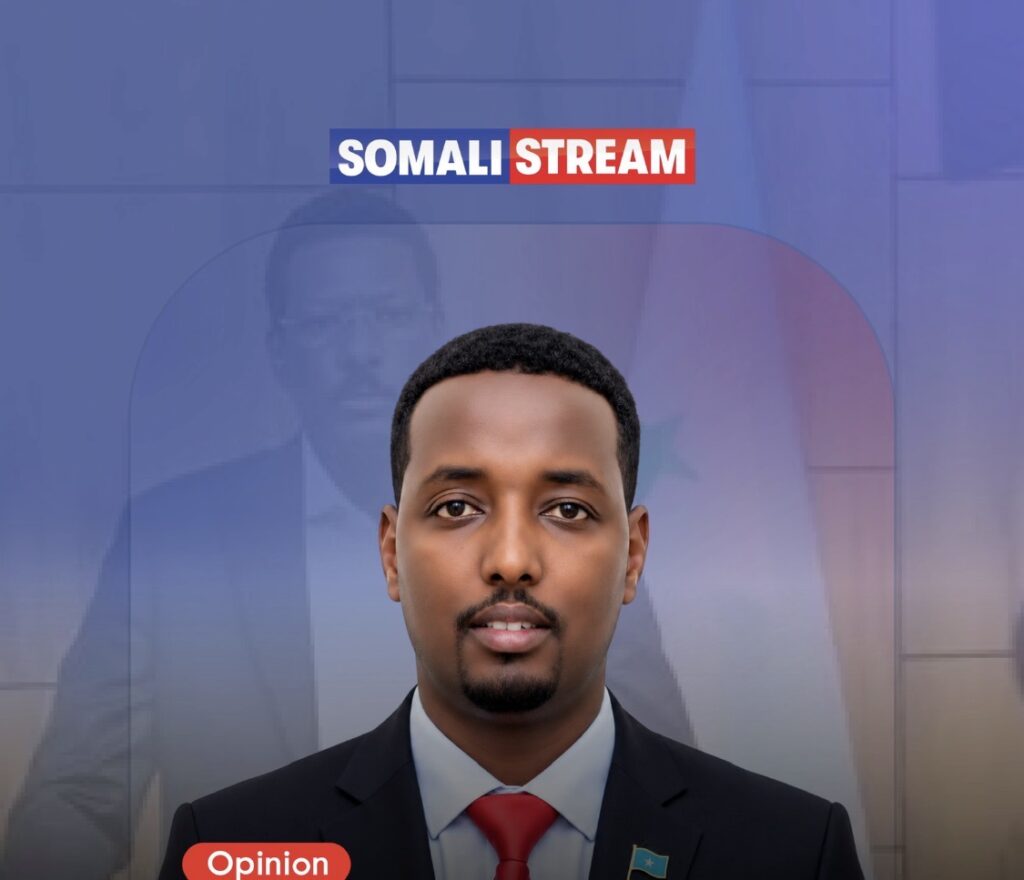
Leadership is often measured not only by the battles won, but by the institutions left behind. In Somalia’s federal landscape, where political transitions have often been accompanied by uncertainty, President Ahmed Abdi Kariye, popularly known as QoorQoor, has sought to define his presidency through a different philosophy: stability before politics, institutions before personalities, and unity before division.
When QoorQoor took office in 2020, Galmudug had already passed through several important phases of state formation. Earlier administrations had secured the state’s recognition within Somalia’s federal system and established Dhuusamareeb as its capital. His challenge was no longer to create Galmudug, but to strengthen it.
Over the following years, his administration embarked on an ambitious programme of governance reform, infrastructure development and institution building. Supporters say these efforts have transformed Galmudug from a fragile regional administration into one of Somalia’s more stable federal member states.
Among the administration’s most significant achievements was the unification of Galmudug’s tax collection system. For years, fragmented revenue collection had presented a major obstacle to effective governance. By introducing a more coordinated system, the government sought to strengthen public finances and improve service delivery.
The administration also reduced the many checkpoints that once lined the road between Galinsoor and Galkayo. The changes eased the movement of people and goods, encouraged trade and improved connectivity across central Somalia.
Politically, QoorQoor’s presidency coincided with one of the most sensitive periods in Somalia’s recent history. As the country grappled with an electoral impasse, Dhuusamareeb became the centre of national political dialogue.
The Dhuusamareeb conferences, held under his leadership, brought together federal and regional leaders at a time when political tensions threatened to deepen divisions. Although the meetings did not resolve every dispute, they helped keep negotiations alive and reinforced the importance of dialogue over confrontation.
Supporters argue that this reflected QoorQoor’s approach to leadership, one rooted in consensus, patience and compromise rather than political brinkmanship.
His administration also oversaw an extensive programme of public investment. New government offices, the Presidential Palace, the State Parliament headquarters, ministry buildings, markets, health facilities, water projects and roads reshaped the physical landscape of Dhuusamareeb and other parts of Galmudug. Many of these projects were delivered through partnerships involving local communities, the Federal Government and development partners.
Alongside physical development came efforts to strengthen democratic governance. Local council elections were held in several districts, representing another step towards expanding local participation and improving public administration.
Throughout his presidency, QoorQoor became known for his distinctive political language. One of his most widely quoted remarks, “We keep the mouse and the cat in the same pocket”, became shorthand for his ability to bring together rival political groups despite deep differences. Another statement, declaring that “Galmudug has overcome its greatest challenges”, reflected his belief that the state had entered a new era of peace and institutional maturity.
Perhaps the defining moment of his presidency came during this year’s Independence Day celebrations, when he announced that he would not seek another term as President of Galmudug.
At a time when political contests across the region are often marked by fierce competition, his decision to step aside voluntarily was presented by supporters as an affirmation that stability and continuity should take precedence over personal political ambition. He pledged to oversee a peaceful transfer of power and called on future leaders to build upon the progress already made.
QoorQoor has also declared his intention to contest the Presidency of the Federal Republic of Somalia after leaving office in Galmudug. He says the experience gained through leading the state has prepared him to contribute to Somalia’s wider journey towards stability, reconciliation and development.
Today, Galmudug stands in a markedly different position from where it began. Its institutions are stronger, public services have expanded and political stability has improved. While challenges remain, supporters believe the foundations laid during QoorQoor’s presidency have positioned the state for its next chapter.
For them, his legacy will not simply be measured by buildings constructed or roads completed, but by the institutions strengthened, the dialogue sustained and the belief that lasting progress is built through unity, compromise and steady leadership.
Ahmed Faafaale
