


Fresh allegations are shaking Somalia’s fragile federal arrangement, as President Hassan Sheikh Mohamud is accused of quietly extracting millions of dollars from Federal Member States in return for political survival, silence, and continued recognition.
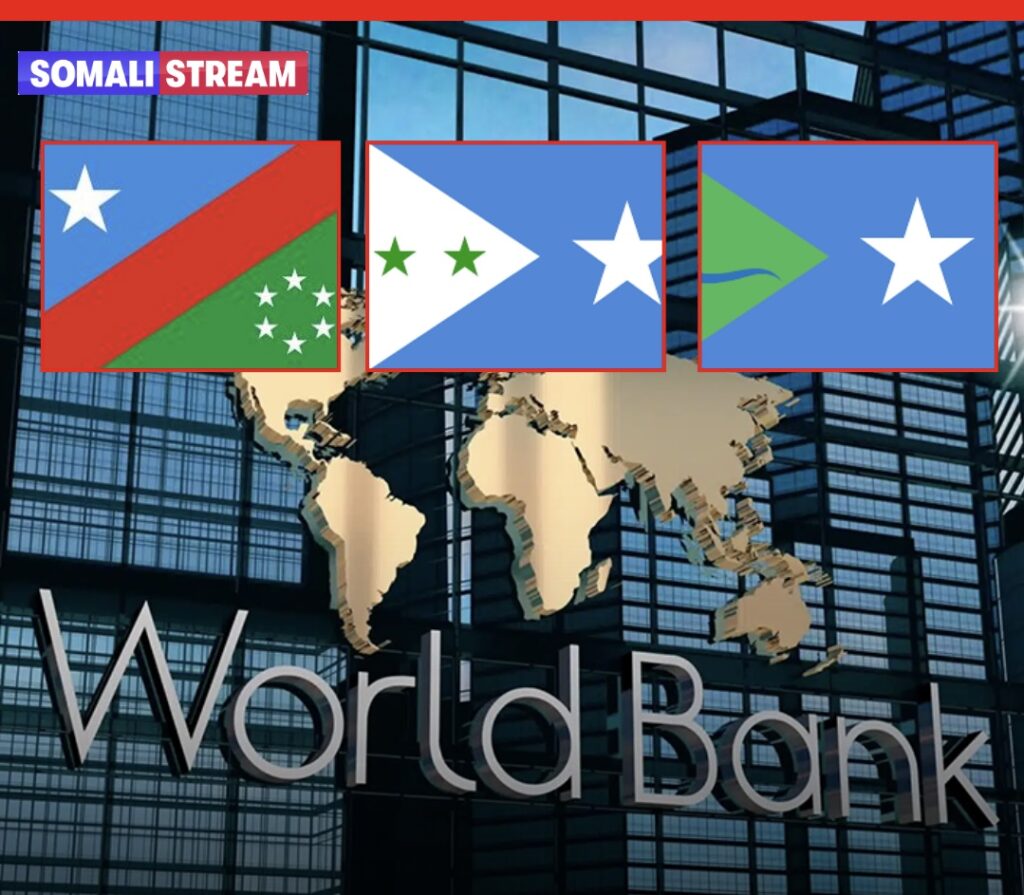
Highly placed sources tell Somali Stream that a series of closed-door meetings between the President and the leaders of three Federal Member States; President of South West State Abdiaziz Hassan Mohamed (Laftagareen), President of Galmudug State, Ahmed Abdi Kariye (Qoor-Qoor) and President of Hirshabelle State Ali Abdullahi Hussein (Ali Guudlaawe), ended with the Federal Presidency diverting part of the World Bank–funded budget support intended for the regions.
The funds, meant to stabilise regional administrations and strengthen service delivery, allegedly became the price of political accommodation.
Negotiations between President Hassan Sheikh and the three regional leaders reportedly began before the President’s recent visit to Qatar where he attended the Doha Forum, but the talks collapsed during the first round. At that stage, the President is said to have demanded one million US dollars from each regional administration, with the money to be diverted back to the Federal Government. The regional leaders resisted, insisting they could only afford half a million dollars each.
Talks stalled. The Federal Member States argued that there was no clear return for the money being demanded. But with growing political pressure, and with all three leaders governing beyond their constitutional terms, the balance of power shifted.
According to insiders, the President proposed a pause in negotiations until after his Qatar trip. When talks resumed, the outcome had changed: each administration eventually agreed to pay one million dollars, in full and all at a go.
All three administrations share one critical weakness: expired mandates. Their leaders, facing mounting legitimacy questions, reportedly agreed not to leave Mogadishu without securing political assurances from Villa Somalia.
Sources say President Hassan Sheikh did not offer written guarantees. Instead, he gave a carefully worded political message: No elections would be held in their regions for now, and they would remain in office until a future meeting early next year.
In effect, the President achieved two goals at once; securing the money he sought while avoiding firm commitments about their political futures. Meanwhile, alternative candidates aligned with the ruling Justice and Solidarity Party (JSP) coalition were quietly kept in reserve.
Officials told Somali Stream that the President’s political strategy is divided into two tracks: one focused on his long-term political future, and another managing alliances with office-holders and power brokers waiting for their turn.
Several of these political allies, many linked to Galmudug and South West politics, are said to be expecting future rewards; promises the President has yet to fully define.
The alleged financial manoeuvre unfolded in two stages: Full budget support funds were transferred by Somalia’s Ministry of Finance through the Central Bank, as per standard procedure. The Ministries of Finance in the three Federal Member States then returned one million dollars each, in two instalments. These funds were reportedly deposited into a special account held by a private company closely linked to Villa Somalia, at a local bank.
Somali Stream has learnt that this company is one of several private entities allegedly used by the Presidency to discreetly channel funds linked to politically sensitive projects. Individuals close to the centre of power are said to be among its shareholders.
Villa Somalia has reportedly justified the diversion of funds by citing severe financial pressure, especially related to security operations and the ongoing local council elections in Mogadishu.
Revenue from the controversial sale of public land has fallen short, while the Presidency’s election project in the capital suffered a funding crisis after international partners declined to support what they described as a one-sided and legally questionable process.
Shortly after securing the alleged three million dollars, President Hassan Sheikh is said to have personally visited the headquaters of the National Independent Electoral and Boundaries Commission (NIEBC), instructing staff to proceed with elections as scheduled, assuring them that outstanding costs had been covered.
Somalia’s financial outlook is expected to deteriorate further as the government enters the final phase of its term. At the same time, the United States, the United Kingdom, and the European Union are reportedly reducing budgetary support – deepening the strain on public finances.
Puntland and Jubaland, both operating outside Villa Somalia’s immediate political influence, received their World Bank budget support in full last Thursday.
Sources confirm that the President was unable to interfere with funds allocated to these two states, highlighting the limits of Federal authority where political alignment is absent.
While this is not the first time the Federal Government has been accused of pursuing regional funds, analysts warn that the current allegations represent a serious threat to Somalia’s financial reform agenda, painstakingly built over many years.
If proven, such practices risk undermining donor confidence, weakening federal trust, and turning public finance into a tool of political survival rather than national development.
For a country still struggling to rebuild its institutions, the cost may be far greater than the millions quietly moved behind closed doors.